
Global Beverage Crates Market Introduction
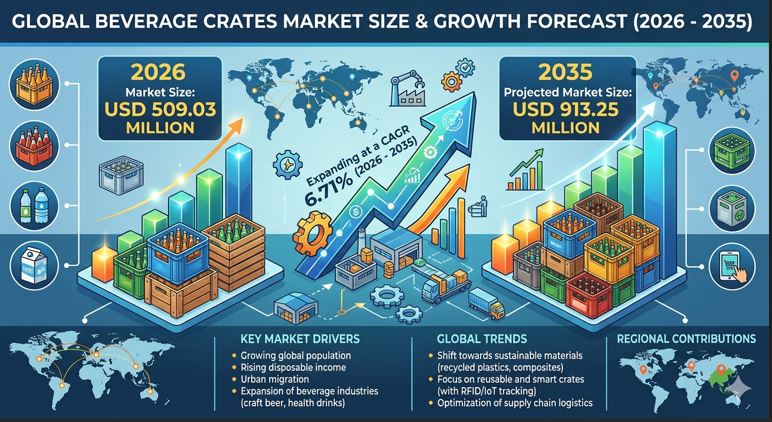
The global beverage crates market size was USD 509.03 million in 2026 to approximately USD 913.25 million by 2035, expanding at a CAGR of 6.71% from 2026 to 2035.
The global beverage crates market plays a crucial role in the storage, transportation, and distribution of beverages across various industries. Beverage crates are specially designed containers used for carrying bottles, cans, and other beverage packaging formats safely and efficiently. These crates are widely utilized by manufacturers, distributors, retailers, and logistics companies to ensure secure handling and minimize product damage during transit. With the rapid growth of the food and beverage sector worldwide, the demand for durable and reusable beverage crates has increased significantly in recent years.
Beverage crates are commonly manufactured using materials such as plastic, wood, and metal, with plastic crates dominating the market due to their lightweight nature, durability, and cost-effectiveness. Plastic beverage crates are extensively preferred because they can withstand harsh transportation conditions, resist moisture, and offer long service life. In addition, reusable plastic crates support sustainability initiatives by reducing single-use packaging waste, making them an environmentally friendly option for beverage companies. The increasing focus on sustainable packaging solutions has further accelerated the adoption of recyclable and reusable beverage crates across global markets.
The market is driven by the rising consumption of alcoholic and non-alcoholic beverages, including soft drinks, bottled water, beer, juices, dairy beverages, and energy drinks. Urbanization, changing lifestyles, and growing disposable incomes have contributed to higher beverage consumption worldwide, thereby boosting the need for efficient packaging and transportation systems. Beverage manufacturers are increasingly investing in advanced crate designs that improve stacking efficiency, optimize storage space, and enhance supply chain operations. As a result, innovative beverage crates with improved load-bearing capacity and ergonomic handling features are gaining popularity.
The expansion of organized retail channels and e-commerce platforms has also positively impacted the beverage crates market. Supermarkets, hypermarkets, convenience stores, and online grocery delivery services require reliable packaging and transportation solutions to manage high product volumes. Beverage crates help streamline logistics processes by enabling safe and efficient movement of products from production facilities to retail outlets and consumers. The increasing demand for fast and secure beverage delivery services has encouraged logistics providers to adopt high-performance beverage crates that can endure repeated use and rough handling conditions.
Regionally, the beverage crates market is witnessing substantial growth across North America, Europe, Asia-Pacific, Latin America, and the Middle East & Africa. Asia-Pacific is expected to emerge as one of the fastest-growing markets due to rapid industrialization, urban population growth, and increasing beverage production activities in countries such as China, India, and Japan. Rising consumer preference for packaged beverages and the expansion of the hospitality sector are further driving market growth in the region. Meanwhile, North America and Europe continue to hold significant market shares owing to established beverage industries, advanced logistics infrastructure, and strong emphasis on sustainable packaging practices.
Technological advancements are also shaping the future of the beverage crates market. Manufacturers are focusing on incorporating smart tracking systems, RFID tags, and customized crate designs to improve inventory management and supply chain visibility. These innovations help companies monitor product movement, reduce losses, and optimize operational efficiency. Additionally, lightweight and foldable beverage crates are gaining traction as they reduce transportation costs and improve storage convenience when not in use.
Despite strong growth prospects, the market faces certain challenges, including fluctuating raw material prices and concerns regarding plastic waste management. However, ongoing developments in recyclable materials and circular economy practices are expected to address these issues effectively. Governments and environmental organizations worldwide are encouraging the use of reusable transport packaging solutions, which is likely to create new growth opportunities for beverage crate manufacturers.
The competitive landscape of the global beverage crates market includes numerous international and regional players focusing on product innovation, strategic partnerships, and expansion initiatives. Companies are investing in research and development activities to produce high-quality crates that meet evolving industry requirements. Customization options, improved durability, and sustainable manufacturing processes have become key competitive factors in the market.
The global beverage crates market is expected to experience steady growth in the coming years, driven by increasing beverage consumption, expanding retail and logistics sectors, and rising awareness regarding sustainable packaging solutions. The market’s evolution toward reusable, durable, and technologically advanced crate systems will continue to support efficient supply chain operations and environmental sustainability across the global beverage industry.
Key Beverage Crates Market Dynamics
The global beverage crates market is influenced by a wide range of dynamic factors that shape its growth, demand patterns, competitive landscape, and future opportunities. Beverage crates are essential components in the beverage supply chain, enabling the safe handling, storage, and transportation of products such as bottled water, soft drinks, alcoholic beverages, dairy products, and juices. As the beverage industry continues to expand worldwide, the market dynamics surrounding beverage crates are becoming increasingly important for manufacturers, suppliers, and logistics providers.
One of the primary drivers of the beverage crates market is the rising global consumption of beverages. Increasing urbanization, population growth, and changing consumer lifestyles have significantly boosted the demand for packaged beverages. Consumers are increasingly opting for convenient, ready-to-drink products, leading to higher production volumes in the beverage industry. This growing production directly increases the requirement for durable and efficient beverage crates that can support large-scale transportation and storage operations. Additionally, the expansion of the hospitality, restaurant, and retail sectors further contributes to the growing demand for beverage crates across both developed and emerging economies.
Another major market dynamic is the increasing focus on sustainability and environmentally friendly packaging solutions. Beverage manufacturers and logistics companies are actively adopting reusable and recyclable crates to reduce packaging waste and comply with environmental regulations. Plastic beverage crates, particularly reusable plastic crates, are gaining popularity because they offer long operational life and can be recycled after repeated usage. Governments and environmental organizations worldwide are promoting sustainable transportation packaging practices, encouraging businesses to move away from single-use packaging materials. This shift toward eco-friendly solutions is expected to continue driving innovation and investment within the beverage crates market.
Technological advancements also play a crucial role in shaping market dynamics. Manufacturers are introducing advanced crate designs that improve durability, stacking efficiency, and ease of handling. Smart technologies such as RFID tracking systems and barcode integration are being incorporated into beverage crates to enhance inventory management and supply chain visibility. These technologies enable companies to monitor crate movement, reduce product losses, and optimize logistics operations. Furthermore, lightweight and foldable crate designs are gaining traction as they help reduce transportation costs and improve storage efficiency when crates are not in use.
The growth of e-commerce and organized retail channels has significantly influenced the beverage crates market. Online grocery delivery services and large retail chains require efficient logistics systems capable of handling high beverage volumes while maintaining product safety. Beverage crates provide an effective solution for transporting products through complex distribution networks. The rapid growth of online beverage sales, particularly after the rise of digital shopping platforms, has accelerated the demand for robust and reusable transportation packaging solutions. This trend is especially prominent in urban areas where consumers increasingly prefer doorstep delivery services.
Raw material price fluctuations represent a key challenge affecting the beverage crates market. Plastic resin, metal, and wood prices are subject to market volatility influenced by global supply chain disruptions, energy costs, and geopolitical factors. Sudden increases in raw material costs can impact manufacturing expenses and profit margins for crate producers. In response, manufacturers are exploring alternative materials, recycling initiatives, and cost-efficient production techniques to maintain market competitiveness. The growing emphasis on circular economy practices is also encouraging companies to invest in recycled plastics and sustainable manufacturing processes.
Regional economic growth patterns significantly impact market expansion. Asia-Pacific remains one of the fastest-growing regions in the beverage crates market due to increasing industrialization, rising disposable incomes, and expanding beverage manufacturing industries. Countries such as China and India are witnessing rapid growth in packaged beverage consumption, creating strong demand for transportation and storage solutions. Meanwhile, North America and Europe continue to demonstrate stable growth supported by mature beverage industries, advanced logistics infrastructure, and stringent sustainability regulations.
Competitive rivalry within the beverage crates market is intensifying as companies focus on product innovation and strategic partnerships. Leading manufacturers are investing heavily in research and development activities to improve crate performance, durability, and customization options. Businesses are also forming collaborations with beverage producers and logistics providers to strengthen distribution networks and expand their market presence. Product differentiation through advanced features such as anti-slip surfaces, ergonomic handles, and enhanced load capacity is becoming increasingly important for maintaining a competitive edge.
Consumer preferences and industry trends also influence market dynamics. The growing popularity of premium beverages, craft drinks, and health-focused products has led to diversified packaging requirements. Beverage companies are seeking customized crate solutions that align with branding strategies and accommodate unique bottle shapes and sizes. This demand for flexibility and customization is encouraging manufacturers to develop innovative crate designs tailored to specific beverage categories.
Key Beverage Crates Market Restraints
Despite the steady growth of the global beverage crates market, several restraints continue to challenge market expansion and profitability. These limitations affect manufacturers, distributors, and end-users across the beverage supply chain. Factors such as fluctuating raw material costs, environmental concerns, high initial investments, and logistical complexities are among the primary restraints impacting the market’s growth potential.
One of the major restraints in the beverage crates market is the volatility in raw material prices. Beverage crates are primarily manufactured using plastic, metal, and wood, all of which are subject to price fluctuations due to changing global supply-demand conditions, energy costs, and geopolitical uncertainties. Plastic resin prices, in particular, can vary significantly depending on crude oil prices and supply chain disruptions. Sudden increases in raw material costs directly impact manufacturing expenses, reducing profit margins for crate manufacturers. Small and medium-sized companies often struggle to absorb these rising costs, making it difficult for them to remain competitive in the market.
Environmental concerns associated with plastic usage also present a significant challenge. Although reusable plastic crates are considered more sustainable than single-use packaging options, growing awareness regarding plastic pollution has increased scrutiny on plastic-based products. Governments and environmental agencies in many countries are implementing strict regulations regarding plastic production, recycling, and waste management. Compliance with these regulations often requires manufacturers to invest heavily in sustainable materials, recycling infrastructure, and environmentally friendly production technologies. These additional costs can limit market growth, especially in regions with strict environmental policies.
Another key restraint is the high initial investment required for reusable crate systems. Beverage companies and logistics providers adopting reusable beverage crates must invest in crate procurement, cleaning systems, tracking technologies, and reverse logistics operations. While reusable crates provide long-term cost benefits, the upfront investment can be substantial, particularly for small beverage manufacturers and regional distributors. Many businesses in developing economies may hesitate to adopt advanced crate systems due to budget limitations and uncertain return on investment.
Logistical and operational challenges also hinder market expansion. Beverage crates require proper handling, storage, and transportation systems to maintain efficiency throughout the supply chain. Managing the return and reuse of empty crates can become complex, especially in large distribution networks covering multiple geographic regions. Crate loss, theft, and damage during transportation can increase operational costs for beverage companies and logistics providers. Additionally, inadequate infrastructure in some developing regions may create difficulties in maintaining efficient crate circulation systems.
Competition from alternative packaging solutions is another important market restraint. Flexible packaging, corrugated boxes, and lightweight disposable containers are increasingly being used for beverage transportation in certain applications. Some beverage manufacturers prefer these alternatives because they require lower upfront costs and simpler logistics management compared to reusable crate systems. The growing popularity of cans, pouches, and compact beverage packaging formats may also reduce demand for traditional beverage crates in specific market segments.
The market also faces challenges related to standardization and customization requirements. Beverage companies often require crates designed specifically for unique bottle shapes, branding needs, or transportation conditions. Producing customized crates can increase manufacturing complexity and operational costs. In addition, the absence of standardized crate sizes across regions and beverage categories may limit compatibility within global supply chains, reducing operational efficiency for multinational beverage companies.
Economic uncertainties and global supply chain disruptions further impact the beverage crates market. Events such as economic slowdowns, trade restrictions, labor shortages, and transportation disruptions can negatively affect beverage production and distribution activities. During periods of reduced consumer spending, beverage sales may decline, directly lowering the demand for beverage crates. Supply chain interruptions can also delay raw material procurement and product deliveries, affecting overall market performance.
Beverage Crates Market Opportunities
The global beverage crates market is witnessing significant growth opportunities due to evolving consumer preferences, rapid industrialization, technological advancements, and the increasing emphasis on sustainable packaging solutions. As beverage consumption continues to rise across the world, manufacturers and logistics providers are actively exploring innovative crate systems to improve transportation efficiency, reduce operational costs, and support environmental goals. These factors are creating numerous opportunities for market expansion and product innovation.
One of the most promising opportunities in the beverage crates market is the growing demand for sustainable and reusable packaging solutions. Governments, environmental organizations, and consumers are increasingly encouraging businesses to reduce packaging waste and adopt eco-friendly alternatives. Reusable plastic beverage crates are gaining widespread popularity because they can be used multiple times, reducing dependence on single-use packaging materials. Manufacturers that invest in recyclable materials, environmentally friendly production methods, and circular economy initiatives are expected to gain a strong competitive advantage in the market. The rising awareness regarding environmental sustainability is likely to create long-term growth opportunities for reusable beverage crate systems.
The expansion of the global beverage industry also presents major opportunities for market players. Increasing consumption of bottled water, carbonated drinks, juices, alcoholic beverages, dairy products, and energy drinks is driving the need for efficient transportation and storage solutions. Emerging economies, particularly in Asia-Pacific, Latin America, and Africa, are experiencing rapid urbanization and rising disposable incomes, which are boosting packaged beverage demand. As beverage manufacturers expand production capacities in these regions, the requirement for durable beverage crates is expected to grow substantially.
The rapid development of e-commerce and online grocery delivery services is another key opportunity for the beverage crates market. Consumers increasingly prefer home delivery services for beverages and daily essentials, leading to higher demand for reliable logistics and packaging solutions. Beverage crates help ensure safe product transportation and minimize damage during delivery. Companies involved in online retail and supply chain management are investing in advanced crate systems that offer durability, stackability, and efficient handling. This trend is expected to continue as digital commerce expands globally.
Technological innovation offers additional opportunities for market growth. Manufacturers are increasingly integrating smart technologies such as RFID tags, GPS tracking systems, and barcode labeling into beverage crates. These technologies improve supply chain visibility, inventory management, and asset tracking efficiency. Smart beverage crates help reduce losses, monitor crate circulation, and optimize logistics operations. Companies that develop technologically advanced crate systems can strengthen their market position and attract large beverage manufacturers seeking modern supply chain solutions.
Customization and product innovation also create growth potential in the market. Beverage companies are looking for crate designs that align with their branding strategies and specific packaging requirements. Customized beverage crates with enhanced load-bearing capacity, ergonomic handles, and attractive branding features are becoming increasingly popular. Manufacturers that offer flexible design solutions and tailor-made products for different beverage categories can capture new business opportunities and strengthen customer relationships.
Another major opportunity lies in the adoption of lightweight and foldable beverage crates. These crates reduce transportation costs, improve storage efficiency, and simplify logistics operations. Foldable crates require less storage space when not in use, making them highly beneficial for large distribution networks. As companies focus on reducing fuel consumption and operational expenses, demand for lightweight crate solutions is expected to increase steadily.
Growing investments in cold chain logistics and beverage distribution infrastructure are also supporting market expansion. Beverage products often require secure and temperature-controlled transportation systems to maintain product quality. Durable beverage crates play a vital role in protecting products throughout the supply chain. The modernization of logistics networks in developing economies is expected to further increase demand for advanced beverage crate solutions.
The beverage crates market presents numerous growth opportunities driven by sustainability trends, expanding beverage consumption, technological advancements, and the rise of e-commerce platforms. Companies that focus on innovation, customization, and environmentally responsible manufacturing practices are likely to benefit from the evolving market landscape. As global supply chains continue to modernize, the demand for efficient, reusable, and technologically advanced beverage crates is expected to grow significantly in the coming years.
Beverage Crates Market Drivers
The global beverage crates market is experiencing substantial growth due to several important driving factors that are increasing demand for efficient transportation and storage solutions across the beverage industry. Beverage crates are essential for handling products such as bottled water, carbonated drinks, dairy beverages, alcoholic drinks, juices, and energy drinks. As beverage production and distribution activities continue to expand worldwide, the market for durable and reusable beverage crates is gaining strong momentum.
One of the primary drivers of the beverage crates market is the growing global consumption of packaged beverages. Rapid urbanization, changing lifestyles, and increasing disposable incomes have significantly influenced consumer preferences toward ready-to-drink and packaged beverages. The demand for bottled water, soft drinks, and convenience beverages is rising steadily in both developed and developing economies. This growth in beverage production directly increases the need for reliable packaging and transportation systems, creating strong demand for beverage crates across the supply chain.
The expansion of the food and beverage industry is another major factor driving market growth. Beverage manufacturers are continuously increasing production capacities to meet rising consumer demand. Large-scale production and distribution operations require durable crates capable of safely transporting products while minimizing breakage and losses. Beverage crates help streamline logistics and improve operational efficiency, making them an important part of modern beverage supply chains. As beverage companies continue to expand globally, the demand for high-performance crate systems is expected to rise further.
The increasing emphasis on sustainable and reusable packaging solutions is also contributing significantly to market growth. Governments, environmental organizations, and consumers are encouraging businesses to adopt eco-friendly packaging alternatives that reduce waste generation. Reusable plastic beverage crates are becoming increasingly popular because they offer long service life, durability, and recyclability. Compared to single-use packaging materials, reusable crates help lower environmental impact and reduce long-term packaging costs. This growing focus on sustainability is encouraging beverage manufacturers and logistics companies to invest in advanced reusable crate systems.
Another key driver is the rapid growth of organized retail and e-commerce industries. Supermarkets, hypermarkets, convenience stores, and online grocery delivery platforms require efficient logistics systems to handle high beverage volumes safely and quickly. Beverage crates provide secure storage and transportation, helping retailers maintain product quality during handling and distribution. The increasing popularity of online beverage purchasing and home delivery services has further accelerated the need for durable and reusable crates capable of withstanding repeated transportation cycles.
Technological advancements in crate manufacturing are also supporting market expansion. Manufacturers are developing innovative beverage crate designs with improved durability, stackability, and ergonomic handling features. Advanced technologies such as RFID tracking systems, barcode integration, and smart inventory management solutions are being incorporated into beverage crates to enhance supply chain visibility and operational efficiency. These smart crate systems help companies monitor product movement, reduce losses, and improve inventory control, making them highly attractive to large beverage manufacturers and distributors.
The growth of international trade and global beverage distribution networks is another important market driver. Beverage companies are increasingly exporting products to international markets, creating greater demand for secure and efficient transportation solutions. Beverage crates help protect products during long-distance shipping and handling, reducing the risk of damage and improving supply chain reliability. As global trade activities continue to increase, the need for durable transportation packaging solutions is expected to grow steadily.
Additionally, the expansion of the hospitality and foodservice sectors is positively influencing market demand. Restaurants, hotels, cafes, bars, and catering services require efficient beverage handling and storage systems to support daily operations. The rising number of hospitality establishments worldwide is contributing to increased demand for beverage crates across commercial distribution channels.
Beverage Crates Market Trends
The global beverage crates market is evolving rapidly as beverage manufacturers, logistics providers, and retailers adopt modern packaging and transportation solutions to improve operational efficiency and sustainability. Several emerging trends are reshaping the market landscape, driven by changing consumer preferences, technological advancements, environmental concerns, and the expansion of global beverage distribution networks. These trends are expected to significantly influence market growth and product innovation in the coming years.
One of the most prominent trends in the beverage crates market is the growing demand for sustainable and reusable packaging solutions. Environmental concerns regarding plastic waste and carbon emissions have encouraged beverage companies to shift toward reusable transport packaging systems. Reusable plastic beverage crates are increasingly replacing single-use packaging materials due to their long lifespan, durability, and recyclability. Many beverage manufacturers are implementing circular economy strategies that focus on reducing waste through recycling and repeated crate usage. This sustainability trend is particularly strong in regions with strict environmental regulations, where companies are under pressure to adopt eco-friendly logistics practices.
The increasing use of recycled materials in crate manufacturing is another major market trend. Manufacturers are investing in advanced recycling technologies to produce beverage crates using recycled plastics and environmentally responsible raw materials. This approach helps companies reduce production costs, lower environmental impact, and align with global sustainability goals. Consumers are also becoming more conscious of environmentally friendly packaging, motivating beverage brands to promote sustainable transportation solutions as part of their corporate responsibility initiatives.
Technological integration is significantly transforming the beverage crates market. Smart beverage crates equipped with RFID tags, GPS tracking systems, and barcode technologies are becoming increasingly popular. These advanced tracking solutions improve inventory management, supply chain visibility, and operational efficiency. Beverage companies can monitor crate locations, track product movement, and reduce losses caused by theft or misplacement. Smart crate systems also support automated logistics operations and real-time supply chain monitoring, helping businesses optimize transportation and warehouse management processes.
Another important trend is the rising popularity of lightweight and foldable beverage crates. Manufacturers are designing crates that are easier to handle, transport, and store while maintaining high durability and load-bearing capacity. Lightweight crates help reduce fuel consumption and transportation costs, making them attractive for large-scale beverage distribution networks. Foldable beverage crates are particularly beneficial because they occupy less storage space when not in use, improving warehouse efficiency and lowering logistics expenses. This trend is gaining momentum as companies focus on cost optimization and sustainable transportation practices.
Customization and branding are also emerging as key trends in the beverage crates market. Beverage companies increasingly seek customized crate designs that reflect their brand identity and accommodate specific packaging requirements. Crates with company logos, unique color schemes, and tailored dimensions are becoming more common in the market. Manufacturers are offering personalized crate solutions that enhance product visibility, improve brand recognition, and support efficient handling of different beverage bottle shapes and sizes. The growing popularity of premium and specialty beverages has further increased demand for customized transportation packaging solutions.
The rapid growth of e-commerce and online beverage delivery services is another trend significantly influencing the market. Consumers are increasingly purchasing beverages through digital platforms due to convenience and expanding home delivery services. This shift has increased the need for durable and reusable beverage crates capable of protecting products during multiple stages of transportation. Beverage distributors and logistics providers are investing in advanced crate systems designed specifically for e-commerce operations, where secure handling and fast delivery are essential.
Automation and digitalization within warehouses and logistics centers are also shaping market trends. Beverage companies are adopting automated handling systems, robotic sorting technologies, and smart warehouse management solutions that require standardized and durable crate designs. Beverage crates compatible with automated logistics systems help improve productivity, reduce labor costs, and minimize product damage during handling. As supply chains continue to modernize, demand for technologically compatible crate systems is expected to increase.
Another significant trend is the increasing demand from emerging economies. Rapid urbanization, rising disposable incomes, and changing consumption patterns in countries across Asia-Pacific, Latin America, and Africa are driving beverage industry expansion. Growing demand for packaged beverages in these regions is creating substantial opportunities for beverage crate manufacturers. Companies are expanding their production capacities and distribution networks to cater to these high-growth markets.
The rise of health-conscious consumers and premium beverage products is also influencing crate design trends. Functional beverages, organic drinks, craft beverages, and premium bottled products often require specialized packaging and transportation solutions. Manufacturers are developing crates with enhanced protection features to safely transport fragile and high-value beverage products. This trend is encouraging innovation in crate materials, design structures, and cushioning capabilities.
Leading Key Players in the Beverage Crates Market
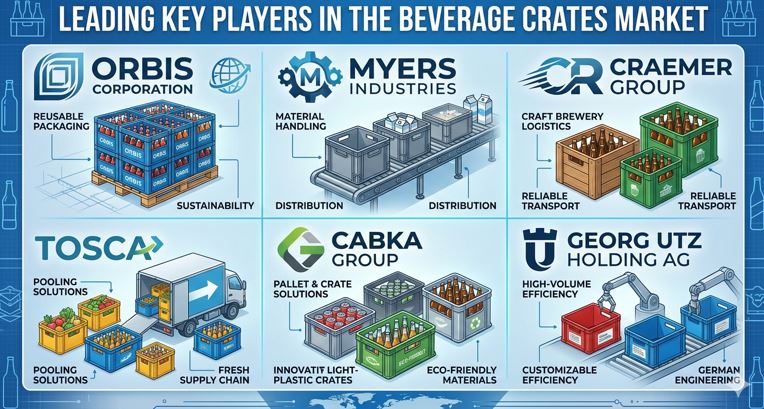
- ORBIS Corporation
- Myers Industries
- Craemer Group
- Tosca
- CABKA Group
- Georg Utz Holding AG
Beverage Crates Market Segmentation
The global beverage crates market is segmented based on type, application, and region. These market segments help manufacturers, suppliers, and industry participants understand evolving customer requirements and identify growth opportunities across different beverage categories and geographical markets. Beverage crates are widely used for the safe transportation, storage, and handling of bottled and canned beverages, making them an essential component of the beverage supply chain. Market segmentation allows companies to develop customized products and targeted strategies to meet industry-specific demands.
By Type Analysis
Based on type, the beverage crates market is commonly segmented into plastic crates, wooden crates, and metal crates. Among these, plastic beverage crates dominate the global market due to their durability, lightweight structure, cost-effectiveness, and reusability. Plastic crates are extensively used across the beverage industry because they offer excellent resistance to moisture, chemicals, and rough handling conditions. These crates are suitable for repeated transportation cycles and support sustainable packaging practices through recyclability and long service life. Beverage manufacturers and logistics companies increasingly prefer plastic crates because they reduce operational costs and improve supply chain efficiency.
Plastic beverage crates are available in various sizes and designs depending on the type of beverage being transported. Manufacturers are also introducing advanced plastic crates with improved stacking capabilities, ergonomic handles, and smart tracking technologies. The rising focus on sustainability and reusable transport packaging is expected to further strengthen the demand for plastic beverage crates globally.
Wooden beverage crates represent another important segment in the market. These crates are primarily used for premium beverages, specialty drinks, and traditional packaging applications. Wooden crates are valued for their strength, aesthetic appeal, and ability to protect fragile glass bottles during transportation. In some markets, wooden crates are also preferred for wine and craft beverage packaging because they enhance product presentation and brand image. However, higher maintenance requirements, heavier weight, and limited durability compared to plastic crates may restrict their large-scale adoption in modern logistics systems.
Metal beverage crates are used in specialized industrial applications where enhanced strength and load-bearing capacity are required. These crates are highly durable and capable of handling heavy beverage loads under demanding transportation conditions. Metal crates are often utilized in large-scale breweries, industrial beverage distribution systems, and export operations. Although they offer excellent durability, metal crates are generally more expensive and heavier than plastic alternatives, which may limit their usage in cost-sensitive markets.
The growing demand for lightweight, foldable, and stackable beverage crates is influencing product development across all type segments. Manufacturers are focusing on innovative crate designs that improve transportation efficiency, reduce storage space requirements, and support automated warehouse operations. Increasing investments in recyclable materials and sustainable manufacturing technologies are also shaping the future development of beverage crate types worldwide.
By Application Analysis
Based on application, the beverage crates market is segmented into alcoholic beverages, non-alcoholic beverages, dairy beverages, bottled water, and others. The alcoholic beverages segment holds a significant share of the market due to the large-scale distribution of beer, wine, and spirits across global markets. Beverage crates are widely used in breweries and liquor distribution systems because they provide secure handling and efficient transportation of glass bottles and cans. The increasing popularity of craft beer and premium alcoholic beverages is further driving demand for customized and durable beverage crates.
The non-alcoholic beverages segment is also experiencing strong growth due to rising consumption of soft drinks, juices, carbonated beverages, and energy drinks. Urbanization, busy lifestyles, and growing demand for ready-to-drink products are increasing production volumes in this segment. Beverage crates play an important role in maintaining product safety and supporting high-volume logistics operations within the non-alcoholic beverage industry.
The bottled water segment is another major application area for beverage crates. Rising health awareness and increasing demand for safe drinking water have significantly boosted bottled water consumption worldwide. Beverage crates help facilitate the efficient transportation and storage of bottled water products across retail and distribution networks. The growing hospitality and tourism industries are also contributing to higher bottled water demand.
Dairy beverages, including milk-based drinks, flavored milk, and yogurt beverages, require reliable transportation systems to maintain product quality and freshness. Beverage crates are commonly used in dairy distribution networks because they provide stability and protection during transportation. The expansion of cold chain logistics infrastructure is expected to support growth within this application segment.
Other application segments include specialty beverages, herbal drinks, and functional beverages. The growing popularity of health-focused and organic beverage products is encouraging manufacturers to develop customized crate solutions tailored to unique packaging requirements.
Geographical Analysis of Beverage Crates Market
The global beverage crates market demonstrates strong geographical diversity, with significant growth opportunities across North America, Europe, Asia-Pacific, Latin America, and the Middle East & Africa. Each region is influenced by different factors such as beverage consumption patterns, industrial development, logistics infrastructure, environmental regulations, and economic growth.
North America holds a substantial share of the beverage crates market due to its well-established beverage industry and advanced supply chain infrastructure. The region has a high demand for bottled beverages, including soft drinks, alcoholic beverages, bottled water, and dairy products. Beverage manufacturers in the United States and Canada are increasingly adopting reusable and sustainable crate systems to comply with environmental regulations and reduce packaging waste. The rapid growth of e-commerce and organized retail sectors is also contributing to higher demand for durable beverage crates across the region.
Europe is another prominent market for beverage crates, driven by strong environmental awareness and strict sustainability regulations. Countries such as Germany, France, the United Kingdom, and Italy have well-developed beverage industries that rely heavily on reusable transportation packaging solutions. The region has witnessed significant adoption of recyclable plastic crates and advanced logistics systems designed to improve supply chain efficiency. European beverage manufacturers are also investing in smart crate technologies, including RFID tracking systems and automated warehouse solutions.
Asia-Pacific is expected to emerge as the fastest-growing regional market during the forecast period. Rapid urbanization, increasing disposable incomes, and expanding beverage production activities are driving strong demand for beverage crates across countries such as China, India, Japan, and Southeast Asian nations. Rising consumption of packaged beverages, bottled water, and ready-to-drink products is encouraging beverage companies to strengthen their logistics and distribution networks. Additionally, the growth of organized retail and e-commerce platforms in the region is increasing the need for efficient transportation packaging systems.
China remains one of the largest contributors to regional market growth due to its massive beverage manufacturing industry and extensive domestic distribution networks. India is also witnessing rising demand for beverage crates as urban populations grow and consumer preferences shift toward packaged beverages. The expansion of hospitality, tourism, and foodservice industries further supports market growth in Asia-Pacific.
Latin America is experiencing steady growth in the beverage crates market due to increasing beverage consumption and industrial development. Countries such as Brazil and Mexico have large beverage manufacturing sectors, particularly in soft drinks and alcoholic beverages. Beverage crate demand in the region is supported by improving logistics infrastructure and growing retail distribution networks.
The Middle East & Africa region is gradually emerging as a promising market for beverage crates. Rising urbanization, population growth, and increasing investments in food and beverage industries are driving demand for transportation packaging solutions. Growing tourism activities and rising bottled water consumption in the region are also contributing to market expansion.
The geographical analysis of the beverage crates market highlights strong growth potential across both developed and emerging economies. Increasing beverage consumption, expanding retail infrastructure, sustainability initiatives, and advancements in logistics technologies are expected to continue driving regional market growth in the coming years.
FAQ
What are beverage crates used for?
Beverage crates are used for the storage, handling, and transportation of beverages such as bottled water, soft drinks, alcoholic beverages, juices, and dairy products. They help protect products during shipping and improve supply chain efficiency.
Which material is commonly used for manufacturing beverage crates?
Plastic is the most commonly used material for beverage crates because it is lightweight, durable, reusable, and cost-effective. Wooden and metal crates are also used for specific industrial and premium packaging applications.
What factors are driving the growth of the beverage crates market?
The market is driven by rising consumption of packaged beverages, growing demand for sustainable packaging solutions, expansion of retail and e-commerce industries, and advancements in logistics and transportation systems.
Which region is expected to witness significant growth in the beverage crates market?
Asia-Pacific is expected to experience substantial market growth due to rapid urbanization, increasing beverage production, rising disposable incomes, and expanding retail distribution networks in countries such as China and India.
Why are reusable beverage crates gaining popularity?
Reusable beverage crates are gaining popularity because they reduce packaging waste, lower long-term operational costs, support sustainability initiatives, and provide durable transportation solutions for repeated use across supply chains.
