
Global Body Augmentation Filler Market Introduction
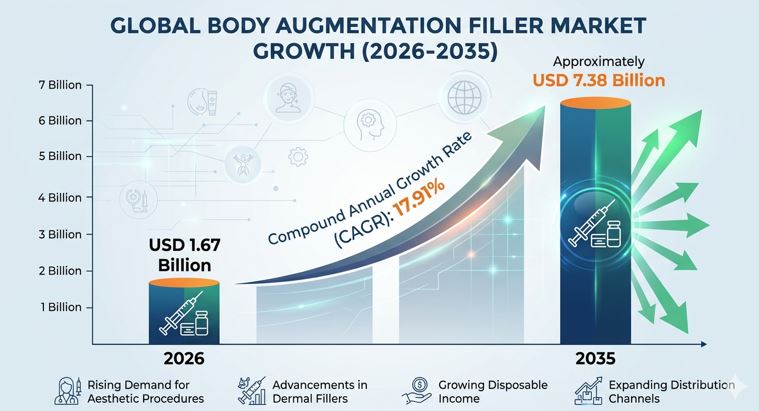
The global body augmentation filler market size USD 1.67 billion in 2026 to approximately USD 7.38 billion by 2035, expanding at a CAGR of 17.91% from 2026 to 2035.
The global body augmentation filler market has witnessed significant growth in recent years due to the increasing demand for non-surgical cosmetic enhancement procedures across the world. Body augmentation fillers are injectable substances used to improve body contours, restore lost volume, and enhance specific body areas such as the buttocks, hips, calves, breasts, and hands. These fillers offer a minimally invasive alternative to traditional surgical procedures, making them increasingly popular among consumers seeking aesthetic improvements with shorter recovery times and lower risks.
The market is primarily driven by rising beauty consciousness, changing lifestyle patterns, and the growing influence of social media and celebrity culture. Consumers today are more aware of aesthetic treatments and are actively seeking procedures that help them achieve a youthful and attractive appearance. The popularity of body contouring procedures has increased substantially among both men and women, especially in urban populations where disposable incomes are higher and access to cosmetic clinics is more widespread.
Technological advancements in dermal filler formulations and injection techniques have further contributed to market growth. Manufacturers are continuously developing innovative products with improved safety profiles, longer-lasting results, and enhanced biocompatibility. Commonly used body augmentation fillers include hyaluronic acid fillers, calcium hydroxylapatite fillers, poly-L-lactic acid fillers, and polymethyl methacrylate fillers. Each filler type offers unique benefits depending on the treatment area and desired outcome. Hyaluronic acid fillers, for example, are highly popular because of their temporary yet natural-looking effects and minimal side effects.
The increasing preference for non-invasive and minimally invasive cosmetic procedures is another major factor supporting market expansion. Surgical body augmentation procedures often involve higher costs, longer recovery periods, and potential complications. In contrast, injectable fillers provide immediate or gradual results with relatively less downtime. This convenience has attracted a larger consumer base, including working professionals and younger demographics who prefer quick and effective aesthetic solutions.
The global body augmentation filler market is also benefiting from the rapid growth of medical aesthetics clinics, dermatology centers, and cosmetic surgery facilities. Many healthcare providers are expanding their aesthetic service portfolios to meet growing patient demand. In addition, the availability of skilled practitioners and advancements in training programs have improved procedural outcomes, further increasing consumer confidence in body filler treatments.
Geographically, North America currently dominates the global market due to the high adoption of cosmetic procedures, strong healthcare infrastructure, and the presence of leading market players. The United States remains one of the largest contributors to market revenue because of growing consumer awareness and rising expenditure on aesthetic treatments. Europe also holds a substantial market share, supported by increasing demand for anti-aging and body contouring solutions in countries such as Germany, France, and the United Kingdom.
Meanwhile, the Asia-Pacific region is expected to witness the fastest growth during the forecast period. Factors such as rising disposable incomes, expanding medical tourism industries, increasing urbanization, and the growing popularity of beauty enhancement treatments are driving market development in countries like China, South Korea, Japan, and India. South Korea, in particular, is recognized as a global hub for cosmetic procedures and innovation in aesthetic medicine.
Despite strong growth potential, the market faces certain challenges. Concerns regarding product safety, side effects, and regulatory approvals can hinder market expansion. Some filler procedures may result in complications such as swelling, bruising, allergic reactions, or uneven results if not administered properly. Therefore, regulatory authorities in various countries continue to impose strict guidelines for product approval and practitioner certification to ensure patient safety.
Competition within the market is intensifying as both established pharmaceutical companies and emerging aesthetic brands focus on product innovation and strategic partnerships. Key market participants are investing heavily in research and development activities to introduce advanced filler products with longer durability and improved patient satisfaction. Marketing campaigns, celebrity endorsements, and digital promotion strategies are also playing a critical role in increasing product visibility and consumer engagement.
The future outlook for the global body augmentation filler market remains highly promising. Growing acceptance of cosmetic enhancements, increasing awareness about minimally invasive procedures, and continuous technological advancements are expected to fuel sustained market growth over the coming years. Furthermore, the integration of artificial intelligence, digital imaging, and personalized treatment planning in aesthetic medicine may enhance procedural accuracy and patient experiences, creating new opportunities for market expansion.
Key Body Augmentation Filler Market Dynamics
The global body augmentation filler market is experiencing rapid transformation due to evolving consumer preferences, technological innovations, and increasing awareness of minimally invasive cosmetic procedures. Market dynamics refer to the major factors that influence the growth, opportunities, challenges, and overall performance of the industry. These dynamics play a crucial role in shaping market demand, competitive strategies, and future development trends across different regions.
One of the primary drivers of the body augmentation filler market is the growing demand for aesthetic enhancement procedures. Consumers are increasingly seeking treatments that improve physical appearance and body contours without undergoing invasive surgeries. The rising emphasis on beauty standards, social acceptance of cosmetic procedures, and the influence of digital media platforms have significantly boosted interest in body fillers. Social media influencers, celebrities, and online beauty trends have encouraged individuals to pursue cosmetic enhancements to achieve desired body aesthetics.
Another major market driver is the increasing preference for minimally invasive procedures. Traditional surgical body augmentation methods often involve higher costs, anesthesia, longer recovery periods, and potential post-surgical complications. In contrast, body augmentation fillers provide a non-surgical alternative with quicker treatment sessions, minimal downtime, and relatively lower risks. This convenience has attracted a wider consumer base, including younger individuals and working professionals who prefer procedures that fit into their busy lifestyles.
Technological advancements in filler products and injection techniques are also contributing significantly to market growth. Manufacturers are continuously investing in research and development to introduce advanced fillers with enhanced durability, safety, and natural-looking results. Modern filler formulations are designed to improve compatibility with human tissues while minimizing adverse reactions. Innovations such as long-lasting hyaluronic acid fillers, collagen stimulators, and bioengineered filler materials have improved treatment outcomes and increased consumer satisfaction.
The increasing aging population worldwide is another important factor influencing the market. As people age, they naturally experience volume loss, skin sagging, and reduced elasticity in different body areas. Older consumers are increasingly turning toward body augmentation fillers to restore youthful body contours and improve overall appearance. Anti-aging procedures have become more common among middle-aged and elderly populations, creating strong demand for advanced aesthetic treatments.
Rising disposable incomes and improved living standards are further accelerating market expansion, particularly in emerging economies. Consumers in developing countries are spending more on personal grooming, wellness, and cosmetic treatments as their purchasing power increases. Urbanization and growing middle-class populations have also contributed to greater awareness and accessibility of aesthetic services. Countries in the Asia-Pacific and Latin American regions are witnessing rapid market growth due to increasing consumer spending on cosmetic enhancements.
The expansion of medical aesthetics clinics and cosmetic treatment centers is another crucial dynamic shaping the market. Healthcare providers are increasingly offering specialized body contouring and filler procedures to meet growing consumer demand. The availability of trained professionals and advanced treatment technologies has improved patient confidence and treatment success rates. Many clinics are also adopting personalized treatment plans and digital imaging technologies to deliver customized aesthetic solutions.
However, despite the strong growth potential, the body augmentation filler market also faces several restraints and challenges. One of the major concerns is the risk of side effects and complications associated with filler procedures. Improper injection techniques, low-quality products, or unqualified practitioners can lead to issues such as swelling, infection, allergic reactions, tissue damage, or asymmetrical results. Such complications may negatively affect consumer confidence and create hesitation among potential patients.
Strict regulatory requirements also pose challenges for manufacturers and healthcare providers. Regulatory authorities across different countries enforce stringent guidelines regarding product safety, quality standards, and clinical approvals. Obtaining approvals for new filler products can be time-consuming and expensive, limiting market entry for smaller companies. In addition, varying regulatory frameworks across regions create operational complexities for global market players.
The high cost of advanced filler treatments may also restrict market growth in certain regions. Premium filler products and repeated maintenance sessions can be expensive, making them less accessible to lower-income consumers. Although minimally invasive procedures are generally more affordable than surgery, cost remains an important consideration for many individuals seeking aesthetic treatments.
Competition within the market is becoming increasingly intense as established pharmaceutical companies and emerging cosmetic brands strive to strengthen their market presence. Companies are focusing on product innovation, strategic partnerships, mergers, and acquisitions to gain competitive advantages. Marketing strategies, celebrity endorsements, and social media advertising are playing a significant role in attracting consumers and expanding brand recognition.
In addition to current market drivers, several emerging trends are expected to shape the future of the body augmentation filler industry. The growing demand for personalized cosmetic treatments, regenerative aesthetics, and combination therapies is creating new growth opportunities. Consumers are increasingly seeking natural-looking enhancements tailored to their individual body structures and aesthetic goals. Advances in artificial intelligence and digital imaging technologies are also supporting more precise treatment planning and patient consultations.
Medical tourism is another growing factor positively influencing the market. Many individuals travel internationally to undergo cosmetic procedures in countries offering high-quality treatments at comparatively lower costs. Countries such as South Korea, Thailand, Turkey, and India have emerged as popular destinations for aesthetic treatments, further boosting global market expansion.
The body augmentation filler market is shaped by a combination of strong growth drivers, evolving consumer trends, technological advancements, and regulatory challenges. The increasing acceptance of non-surgical aesthetic procedures and continuous product innovation are expected to support long-term market growth. As consumer awareness and accessibility continue to improve worldwide, the market is likely to witness sustained expansion and increasing investment from leading industry participants.
Key Body Augmentation Filler Market Restraints
The global body augmentation filler market has experienced significant growth in recent years due to rising demand for minimally invasive cosmetic procedures and increasing aesthetic awareness among consumers. However, despite the market’s promising expansion potential, several restraints continue to limit its growth across different regions. These challenges affect manufacturers, healthcare providers, and consumers alike, influencing product adoption, regulatory approvals, treatment accessibility, and overall market development.
One of the most significant restraints in the body augmentation filler market is the risk of side effects and procedural complications. Although body fillers are generally considered safer than surgical body augmentation procedures, they are not entirely risk-free. Improper injection techniques, low-quality filler products, or treatments performed by inexperienced practitioners can result in complications such as swelling, bruising, infection, tissue necrosis, allergic reactions, asymmetry, and filler migration. In severe cases, patients may require corrective treatments or surgical intervention to resolve complications. Negative treatment outcomes can damage consumer trust and discourage potential patients from opting for filler procedures.
The increasing number of unlicensed practitioners and unauthorized cosmetic clinics also presents a major challenge for the market. In many countries, aesthetic procedures are being offered by individuals without proper medical training or certification. These unauthorized providers may use counterfeit or substandard filler products, increasing the risk of health complications. The availability of low-cost illegal treatments not only threatens patient safety but also damages the reputation of the overall aesthetic industry. Regulatory bodies in various countries continue to struggle with monitoring and controlling unauthorized cosmetic practices.
Stringent regulatory requirements are another important restraint affecting market growth. Body augmentation fillers are classified as medical products in many regions and therefore require extensive clinical testing and regulatory approvals before commercialization. Regulatory agencies such as the U.S. Food and Drug Administration (FDA), the European Medicines Agency (EMA), and other national authorities enforce strict guidelines regarding product safety, quality, efficacy, labeling, and manufacturing standards. Obtaining approvals for new filler products can be time-consuming, costly, and complex, particularly for smaller manufacturers with limited financial resources. Delays in product approvals can slow innovation and limit the introduction of advanced treatment options into the market.
The high cost of body augmentation filler treatments is also restricting market expansion, especially in developing economies. Advanced filler products and aesthetic procedures often require significant financial investment, making them inaccessible to large segments of the population. In addition to the initial treatment cost, many fillers are temporary and require regular maintenance sessions to sustain desired results. Repeated procedures increase long-term treatment expenses for consumers. As a result, cost-sensitive individuals may avoid cosmetic filler treatments or choose cheaper alternatives that may not always meet safety standards.
Limited reimbursement policies further contribute to the financial burden on patients. In most countries, cosmetic body filler procedures are considered elective treatments and are not covered under public or private health insurance plans. Consumers are therefore required to pay out-of-pocket for aesthetic procedures, reducing affordability and limiting market penetration among middle-income populations.
Social stigma and cultural barriers continue to affect market adoption in certain regions. Although cosmetic procedures have become more socially accepted in many urban societies, some cultures still associate aesthetic treatments with vanity or unnecessary luxury. Conservative social attitudes may discourage individuals from openly pursuing cosmetic enhancements. In some developing regions, awareness regarding body augmentation fillers remains limited, and consumers may lack sufficient information about available procedures, benefits, and risks.
Another major restraint is the temporary nature of many body augmentation fillers. Unlike permanent surgical implants, most injectable fillers provide results that last for only several months to a few years, depending on the product type and treatment area. Consumers seeking long-term or permanent body enhancement may find temporary fillers less appealing. The need for repeated treatment sessions not only increases costs but also creates inconvenience for patients who prefer one-time procedures with durable outcomes.
Market growth is also affected by increasing concerns regarding counterfeit and low-quality products. The global rise in counterfeit cosmetic injectables poses serious risks to patient safety and brand credibility. Illegal products may contain harmful substances, incorrect formulations, or contaminated ingredients that can lead to severe medical complications. Counterfeit fillers are often sold through unauthorized online platforms or distributed through unregulated channels, making it difficult for consumers to verify product authenticity. This issue creates challenges for legitimate manufacturers attempting to maintain consumer trust and regulatory compliance.
Economic uncertainty and fluctuations in consumer spending can further restrain market growth. Body augmentation fillers are generally considered discretionary or luxury treatments, meaning demand can decline during periods of economic instability or recession. Consumers facing financial pressure may prioritize essential healthcare and household expenses over elective cosmetic procedures. Economic downturns can therefore negatively impact clinic revenues, treatment volumes, and product sales within the aesthetic industry.
A shortage of skilled professionals in certain regions also limits market expansion. Successful filler procedures require specialized knowledge of anatomy, injection techniques, and patient assessment. Inadequate practitioner training can increase the likelihood of complications and unsatisfactory outcomes. While developed regions often have established training programs and certification standards, some emerging markets still face shortages of qualified aesthetic practitioners, restricting the safe and widespread adoption of body filler treatments.
In addition, growing public awareness regarding the potential psychological effects of cosmetic procedures has led to increased scrutiny of the aesthetics industry. Concerns related to body image pressure, unrealistic beauty standards, and mental health issues are encouraging more cautious consumer behavior. Some advocacy groups and healthcare professionals argue that excessive promotion of cosmetic enhancements may negatively affect self-esteem and social well-being, particularly among younger individuals.
while the body augmentation filler market demonstrates substantial growth potential, these restraints continue to create significant challenges for industry participants. Issues related to safety concerns, high treatment costs, regulatory barriers, counterfeit products, and social perceptions must be addressed to ensure sustainable market development. Companies operating in this industry are expected to focus increasingly on product safety, practitioner education, regulatory compliance, and consumer awareness initiatives to overcome these obstacles and strengthen long-term market growth.
Body Augmentation Filler Market Opportunities
The global body augmentation filler market is witnessing substantial growth opportunities due to evolving beauty trends, technological advancements, and the increasing acceptance of non-surgical cosmetic procedures worldwide. As consumers continue to seek minimally invasive body enhancement solutions, market players are presented with numerous opportunities to expand their product offerings, strengthen regional presence, and improve treatment outcomes. The growing focus on aesthetics, combined with advancements in medical technology, is expected to create a favorable environment for long-term market development.
One of the most significant opportunities in the market lies in the rising demand for minimally invasive cosmetic treatments. Consumers today prefer procedures that provide effective aesthetic improvements with reduced pain, lower risks, and minimal recovery time compared to traditional surgical methods. Body augmentation fillers offer a convenient alternative for enhancing body contours, restoring lost volume, and improving physical appearance without major surgery. This growing preference is encouraging clinics and manufacturers to expand their service portfolios and introduce advanced filler products tailored to different body areas and patient needs.
The increasing popularity of personalized aesthetic treatments also presents major growth opportunities for the industry. Modern consumers are seeking customized cosmetic procedures designed according to their body type, age, and aesthetic goals. This trend is driving demand for innovative filler formulations and individualized treatment approaches. Companies investing in personalized treatment technologies, digital imaging systems, and artificial intelligence-assisted consultations can gain a strong competitive advantage in the evolving market landscape.
Technological innovation remains another important opportunity area. Continuous advancements in filler materials, injection techniques, and product durability are helping improve safety, comfort, and patient satisfaction. The development of long-lasting, biocompatible, and collagen-stimulating fillers is attracting more consumers toward non-surgical body enhancement procedures. Manufacturers that focus on research and development activities can capitalize on the growing demand for safer and more effective products.
Emerging economies are expected to provide substantial growth potential for the body augmentation filler market. Countries in the Asia-Pacific, Latin America, and Middle East regions are experiencing rising disposable incomes, increasing urbanization, and growing awareness regarding aesthetic procedures. Expanding middle-class populations in countries such as India, China, Brazil, and Thailand are spending more on beauty and wellness services. As awareness about body contouring procedures increases, demand for body augmentation fillers is likely to rise significantly in these developing markets.
Medical tourism is another major opportunity contributing to market expansion. Many consumers travel internationally to access high-quality cosmetic treatments at affordable prices. Countries such as South Korea, Turkey, Thailand, and India have become popular destinations for aesthetic procedures due to advanced healthcare infrastructure, experienced practitioners, and competitive treatment costs. The growing medical tourism industry is expected to generate increased demand for body augmentation fillers and support the global expansion of aesthetic clinics and healthcare providers.
The growing male consumer segment also represents an emerging opportunity for market participants. Although cosmetic enhancement procedures were traditionally more common among women, an increasing number of men are now seeking body contouring and aesthetic treatments to improve physical appearance and self-confidence. This shift in consumer behavior is encouraging companies to develop marketing strategies and filler products specifically targeted toward male patients.
In addition, the expansion of digital marketing and social media platforms is creating new opportunities for consumer engagement and brand visibility. Beauty influencers, online consultations, and virtual treatment demonstrations are helping aesthetic brands reach wider audiences and educate potential customers about available procedures. Social media platforms have become powerful tools for increasing awareness and influencing purchasing decisions within the cosmetic treatment industry.
The integration of regenerative medicine and combination therapies is also expected to drive future market opportunities. Combining fillers with treatments such as platelet-rich plasma (PRP), skin tightening procedures, and collagen stimulation therapies can improve overall aesthetic outcomes and enhance patient satisfaction. Such innovative treatment approaches are likely to attract consumers seeking comprehensive body rejuvenation solutions.
The body augmentation filler market offers considerable growth opportunities driven by technological advancements, rising aesthetic awareness, expanding medical tourism, and increasing demand for minimally invasive cosmetic procedures. Companies that focus on innovation, patient safety, personalized treatments, and emerging market expansion are expected to benefit significantly from the growing global demand for body enhancement solutions.
Body Augmentation Filler Market Drivers
The global body augmentation filler market is experiencing strong growth due to several key drivers that are shaping consumer demand and encouraging continuous innovation within the aesthetics industry. Increasing awareness regarding cosmetic enhancement procedures, advancements in filler technologies, and the growing preference for minimally invasive treatments are among the major factors supporting market expansion worldwide. As aesthetic medicine continues to evolve, the demand for body augmentation fillers is expected to increase steadily across both developed and emerging economies.
One of the primary drivers of the body augmentation filler market is the rising demand for minimally invasive cosmetic procedures. Consumers increasingly prefer non-surgical treatments that offer effective body contouring results with less pain, reduced downtime, and lower risk compared to traditional surgeries. Injectable fillers provide a convenient solution for enhancing body features such as hips, buttocks, breasts, calves, and hands without requiring hospitalization or lengthy recovery periods. This growing preference for quick and less invasive procedures has significantly boosted the adoption of body augmentation fillers globally.
The increasing influence of social media and celebrity culture is another major factor driving market growth. Beauty standards promoted through social media platforms, entertainment industries, and digital influencers have increased public interest in aesthetic enhancement treatments. Consumers are becoming more conscious of their physical appearance and are actively seeking cosmetic procedures to improve body image and self-confidence. The visibility of cosmetic transformations online has also reduced the social stigma traditionally associated with aesthetic procedures, encouraging more individuals to explore body augmentation treatments.
Technological advancements in filler products and treatment techniques are further accelerating market growth. Manufacturers are investing heavily in research and development to create advanced fillers that offer improved safety, longer-lasting effects, and more natural-looking results. Innovations such as hyaluronic acid-based fillers, collagen stimulators, and bioengineered injectable materials have significantly enhanced treatment quality and patient satisfaction. Improved injection methods and imaging technologies are also helping practitioners deliver more precise and personalized treatment outcomes.
The growing aging population worldwide is another important driver contributing to market demand. As individuals age, they naturally experience volume loss, reduced skin elasticity, and changes in body contours. Older consumers are increasingly turning to body augmentation fillers to restore youthful body appearance and maintain aesthetic appeal. Anti-aging treatments have become highly popular among middle-aged and elderly populations, creating strong demand for advanced cosmetic solutions that provide natural and subtle enhancements.
Rising disposable incomes and improving living standards are also supporting market growth, particularly in emerging economies. Consumers in developing countries are allocating higher spending toward beauty, wellness, and personal care services. Rapid urbanization, increasing middle-class populations, and greater exposure to global beauty trends have contributed to higher acceptance of cosmetic procedures. Countries in the Asia-Pacific and Latin American regions are witnessing growing demand for body contouring treatments as aesthetic awareness continues to increase.
The expansion of medical aesthetics clinics and specialized cosmetic centers is another significant driver for the market. Healthcare providers are increasingly offering advanced body filler procedures to meet rising consumer demand for non-surgical aesthetic treatments. The growing availability of trained practitioners, modern treatment facilities, and customized aesthetic services has improved patient confidence and accessibility. Many clinics are also integrating digital consultation tools and personalized treatment planning systems to enhance customer experience and treatment outcomes.
Medical tourism is playing a crucial role in driving global market growth as well. Many consumers travel internationally to undergo cosmetic procedures in countries offering high-quality treatments at lower costs. Popular medical tourism destinations such as South Korea, Thailand, Turkey, and India have developed strong reputations for aesthetic procedures and advanced cosmetic technologies. The increasing number of international patients seeking affordable body augmentation treatments is contributing significantly to market expansion.
In addition, the growing acceptance of cosmetic procedures among men is creating new growth opportunities for the market. Male consumers are increasingly seeking body contouring and enhancement procedures to improve physical appearance and fitness-related aesthetics. This expanding male demographic is encouraging companies to develop targeted products and marketing campaigns specifically designed for male patients.
The body augmentation filler market is being driven by changing beauty preferences, technological innovation, rising disposable incomes, and increasing awareness regarding minimally invasive cosmetic procedures. As consumer demand for safer, faster, and more personalized body enhancement treatments continues to rise, the market is expected to experience sustained growth in the coming years.
Body Augmentation Filler Market Trends
The global body augmentation filler market is evolving rapidly due to changing consumer preferences, advancements in aesthetic medicine, and increasing demand for non-surgical cosmetic procedures. Several emerging trends are shaping the future of the market and influencing product development, treatment techniques, and consumer behavior. As the aesthetics industry continues to expand globally, these trends are expected to create new opportunities for manufacturers, healthcare providers, and cosmetic clinics.
One of the most significant trends in the body augmentation filler market is the growing preference for minimally invasive cosmetic procedures. Consumers are increasingly seeking alternatives to traditional surgical body augmentation methods that involve longer recovery periods, higher costs, and greater risks. Injectable body fillers offer a convenient solution with faster procedures, minimal downtime, and more natural-looking results. This trend has significantly increased the popularity of body contouring treatments among both younger and older consumers worldwide.
Another important market trend is the increasing demand for natural-looking aesthetic enhancements. Modern consumers are moving away from exaggerated cosmetic results and instead prefer subtle body improvements that enhance their appearance without looking artificial. As a result, aesthetic practitioners are focusing on personalized treatment approaches that deliver balanced and proportionate outcomes. This shift in consumer preference is encouraging manufacturers to develop advanced filler formulations that provide smoother integration with body tissues and more realistic results.
Technological innovation continues to be a major trend influencing the market. Companies are investing heavily in research and development to introduce safer, longer-lasting, and more effective filler products. Advanced hyaluronic acid fillers, collagen stimulators, and bioengineered injectable materials are gaining popularity due to their improved durability and reduced side effects. Additionally, innovations in injection techniques, cannula technology, and digital imaging systems are helping practitioners achieve greater precision and patient satisfaction during procedures.
The rise of personalized aesthetic treatments is also transforming the body augmentation filler industry. Consumers increasingly expect customized procedures based on their body type, age, lifestyle, and aesthetic goals. Clinics are now using advanced consultation tools, facial and body imaging technologies, and data-driven treatment planning to provide individualized cosmetic solutions. Personalized treatments not only improve patient satisfaction but also strengthen long-term customer relationships for aesthetic service providers.
Social media influence has become one of the strongest trends driving market growth. Platforms such as Instagram, TikTok, and YouTube have significantly increased public awareness of cosmetic enhancement procedures. Beauty influencers, celebrities, and online aesthetic content creators frequently share cosmetic treatment experiences and transformation results, encouraging more consumers to explore body augmentation fillers. Social media has also helped normalize aesthetic procedures and reduce the stigma previously associated with cosmetic enhancements.
Another emerging trend is the increasing participation of male consumers in the aesthetics market. Traditionally, cosmetic enhancement procedures were primarily associated with women; however, a growing number of men are now seeking body contouring and augmentation treatments to improve physical appearance and boost confidence. This expanding male consumer segment is encouraging clinics and manufacturers to create targeted treatment solutions and marketing campaigns specifically designed for male patients.
The integration of regenerative medicine into aesthetic treatments is also gaining momentum. Combination therapies involving body fillers and regenerative treatments such as platelet-rich plasma (PRP), stem cell therapy, and collagen induction procedures are becoming increasingly popular. These integrated treatments aim to improve both body contour and skin quality simultaneously, offering more comprehensive aesthetic outcomes for patients.
Medical tourism is another major trend contributing to market growth. Consumers are increasingly traveling to countries known for advanced cosmetic procedures and affordable treatment options. Nations such as South Korea, Thailand, Turkey, and India have emerged as global hubs for aesthetic medicine due to skilled practitioners, modern healthcare infrastructure, and competitive pricing. The growth of medical tourism is helping expand the global reach of body augmentation filler treatments.
In addition, there is a growing focus on safety, regulatory compliance, and practitioner training within the market. Consumers are becoming more aware of treatment risks and are prioritizing procedures performed by qualified professionals using approved products. As a result, manufacturers and clinics are emphasizing transparency, product quality, and patient education to build trust and improve treatment outcomes.
Leading Key Players in the Body Augmentation Filler Market
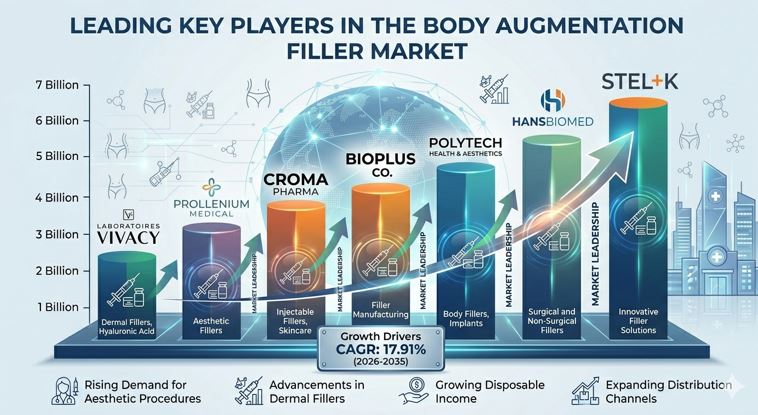
- Laboratoires Vivacy
- Prollenium Medical
- Croma Pharma
- BioPlus Co.
- Polytech Health & Aesthetics
- HansBiomed
- Stel+K
- Aptos
Body Augmentation Filler Market Segmentation
The global body augmentation filler market is segmented based on type, application, end user, and geography. Market segmentation helps industry participants understand consumer preferences, identify growth opportunities, and develop targeted strategies for specific customer groups. The increasing demand for minimally invasive body contouring procedures has encouraged manufacturers and healthcare providers to diversify filler products and treatment applications. Each segment contributes differently to overall market growth depending on consumer demand, technological advancements, and regional adoption trends.
By Type Analysis
Based on type, the body augmentation filler market is commonly segmented into hyaluronic acid fillers, calcium hydroxylapatite fillers, poly-L-lactic acid fillers, polymethyl methacrylate fillers, and others. Among these, hyaluronic acid fillers hold a significant market share due to their safety, effectiveness, and widespread consumer acceptance. Hyaluronic acid is a naturally occurring substance in the body that helps retain moisture and volume, making it highly suitable for aesthetic enhancement procedures. These fillers are popular because they provide natural-looking results, involve minimal recovery time, and are generally reversible if required.
Calcium hydroxylapatite fillers are also gaining popularity in the market due to their longer-lasting effects and collagen-stimulating properties. These fillers are commonly used for deeper body contouring treatments and volume restoration procedures. They are considered effective for enhancing body structure and improving skin firmness over time. Increasing consumer demand for durable and natural body enhancement solutions is expected to support growth in this segment.
Poly-L-lactic acid fillers represent another important category within the market. These fillers work by stimulating collagen production gradually, providing progressive and long-lasting aesthetic improvements. They are increasingly used in body contouring treatments where subtle and natural volume enhancement is preferred. Patients seeking anti-aging and skin rejuvenation treatments are contributing significantly to the growth of this segment.
Polymethyl methacrylate fillers are semi-permanent fillers used for long-term body augmentation procedures. These fillers contain microscopic beads that remain under the skin to provide structural support and sustained volume enhancement. Although this segment accounts for a smaller market share compared to hyaluronic acid fillers, demand continues to grow among consumers seeking more permanent cosmetic results.
The “others” category includes emerging bioengineered fillers, collagen-based fillers, and innovative regenerative filler products. Continuous research and development activities are leading to the introduction of advanced injectable materials with improved biocompatibility and reduced side effects. Manufacturers are increasingly focusing on product innovation to meet evolving consumer demands for safer, longer-lasting, and more personalized body enhancement treatments.
By Application Analysis
Based on application, the body augmentation filler market is segmented into buttock augmentation, breast enhancement, calf augmentation, hand rejuvenation, hip enhancement, and others. Buttock augmentation currently represents one of the fastest-growing application segments due to increasing consumer demand for body contouring and curvier body shapes. Non-surgical buttock enhancement procedures have gained popularity because they provide visible results with less risk and shorter recovery periods compared to surgical implants or fat transfer procedures.
Breast enhancement is another major application area within the market. Many consumers are choosing filler-based breast augmentation treatments as a minimally invasive alternative to surgical implants. Injectable fillers can provide subtle volume enhancement and contour correction without requiring major surgery. Growing awareness regarding non-surgical breast enhancement options is supporting market expansion in this segment.
Calf augmentation procedures are becoming increasingly popular among consumers seeking balanced lower-body aesthetics and improved muscle definition. Body fillers are used to improve calf shape and symmetry, particularly among individuals who are unable to achieve desired results through exercise alone. This segment is expected to grow steadily due to increasing interest in athletic body appearance and body sculpting procedures.
Hand rejuvenation is also emerging as an important application segment in the market. Aging often causes volume loss and visible veins in the hands, leading many consumers to seek filler treatments for youthful-looking skin. Injectable fillers help restore lost volume and improve skin texture, making hand rejuvenation procedures increasingly popular among aging populations.
Hip enhancement procedures are gaining traction as consumers seek fuller and more proportionate body contours. Injectable fillers are being used to improve hip shape and create smoother body curves without invasive surgery. The growing influence of beauty trends and body-positive aesthetics is expected to support further growth in this segment.
The “others” category includes body contouring procedures for areas such as the chest, shoulders, thighs, and facial-body combination treatments. Continuous innovation in aesthetic medicine is expanding the range of applications for body augmentation fillers, creating additional growth opportunities within the market.
Geographical Analysis of Body Augmentation Filler Market
The global body augmentation filler market is geographically segmented into North America, Europe, Asia-Pacific, Latin America, and the Middle East & Africa. Each region demonstrates unique market dynamics influenced by economic conditions, healthcare infrastructure, aesthetic awareness, regulatory frameworks, and consumer preferences.
North America currently dominates the global body augmentation filler market due to high consumer awareness, advanced healthcare infrastructure, and widespread acceptance of cosmetic procedures. The United States accounts for a major share of regional revenue owing to strong demand for minimally invasive aesthetic treatments and high disposable incomes. Consumers in the region are highly influenced by beauty trends, celebrity culture, and social media exposure, which continue to drive market growth. In addition, the presence of leading pharmaceutical and aesthetic companies supports continuous innovation and product availability.
Europe also holds a substantial share in the body augmentation filler market. Countries such as Germany, France, Italy, and the United Kingdom are key contributors to regional growth. Increasing demand for anti-aging treatments, body contouring procedures, and advanced cosmetic solutions is supporting market expansion across the region. European consumers generally prefer natural-looking enhancements and high-quality aesthetic treatments, encouraging clinics to adopt advanced filler technologies and personalized treatment approaches.
The Asia-Pacific region is expected to witness the fastest market growth during the forecast period. Rapid urbanization, rising disposable incomes, increasing beauty consciousness, and expanding medical tourism industries are major factors driving regional demand. Countries such as China, South Korea, Japan, India, and Thailand are emerging as important markets for body augmentation fillers. South Korea, in particular, is globally recognized for its advanced cosmetic surgery and aesthetic treatment industry. The increasing influence of social media and K-beauty trends is also contributing significantly to regional market growth.
Latin America is another growing market for body augmentation fillers, supported by strong cultural acceptance of cosmetic procedures and increasing focus on physical appearance. Brazil and Mexico are among the leading countries in the region due to high demand for body contouring treatments and aesthetic enhancements. The popularity of body sculpting procedures and rising medical tourism activities are further contributing to market development.
The Middle East & Africa region is gradually emerging as a promising market for body augmentation fillers. Increasing urbanization, improving healthcare infrastructure, and rising disposable incomes are supporting market growth in countries such as the United Arab Emirates, Saudi Arabia, and South Africa. Consumers in the region are increasingly adopting minimally invasive cosmetic procedures, particularly among younger populations and high-income groups.
Geographical market trends indicate strong global growth potential for body augmentation fillers. Rising aesthetic awareness, technological advancements, expanding healthcare facilities, and increasing demand for non-surgical cosmetic procedures are expected to drive sustained market expansion across all major regions in the coming years.
FAQ
What are body augmentation fillers?
Body augmentation fillers are injectable substances used to enhance body contours, restore lost volume, and improve the appearance of specific body areas such as the buttocks, hips, breasts, calves, and hands. These fillers provide a minimally invasive alternative to traditional surgical augmentation procedures.
What are the major types of body augmentation fillers available in the market?
The major types of body augmentation fillers include hyaluronic acid fillers, calcium hydroxylapatite fillers, poly-L-lactic acid fillers, polymethyl methacrylate fillers, and collagen-based fillers. Each type offers different benefits in terms of durability, texture, and treatment outcomes.
What factors are driving the growth of the body augmentation filler market?
The market is primarily driven by increasing demand for minimally invasive cosmetic procedures, rising aesthetic awareness, technological advancements in filler products, growing social media influence, and increasing disposable incomes across emerging economies.
Which region dominates the global body augmentation filler market?
North America currently dominates the global market due to high adoption of aesthetic procedures, advanced healthcare infrastructure, and strong consumer awareness. However, the Asia-Pacific region is expected to witness the fastest growth during the forecast period.
What are the key challenges faced by the body augmentation filler market?
Major challenges include high treatment costs, risks of side effects and complications, strict regulatory requirements, counterfeit filler products, and the shortage of skilled aesthetic practitioners in certain regions.
