
Global Cosmeceutical API Market Introduction
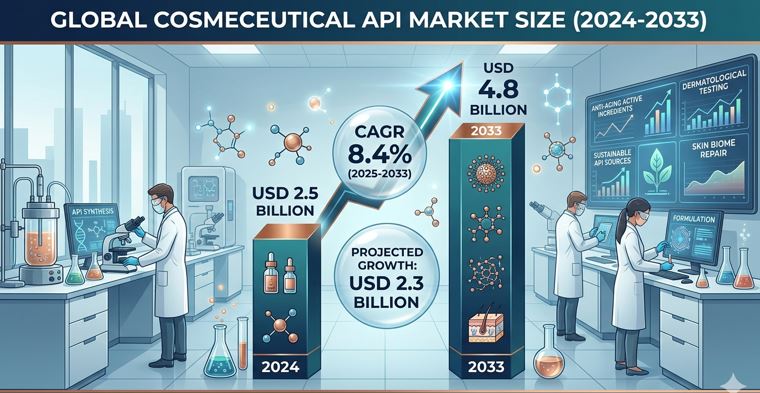
Cosmeceutical API Market size was valued at USD 2.5 billion in 2024 and is projected to reach USD 4.8 billion by 2033, growing at a compound annual growth rate (CAGR) of approximately 8.4% from 2025 to 2033.
The global cosmeceutical API market has emerged as one of the most dynamic segments within the beauty, skincare, and pharmaceutical industries. Cosmeceutical active pharmaceutical ingredients (APIs) are bioactive compounds used in cosmetic products that offer therapeutic or medicinal benefits beyond basic skincare and beauty enhancement. These ingredients are widely incorporated into products such as anti-aging creams, sunscreens, serums, moisturizers, acne treatments, hair care formulations, and skin-brightening solutions. As consumers increasingly seek scientifically backed and multifunctional skincare products, the demand for advanced cosmeceutical APIs continues to grow significantly across the world.
Cosmeceuticals represent a unique intersection between cosmetics and pharmaceuticals. Unlike traditional cosmetics that primarily focus on appearance enhancement, cosmeceutical products contain biologically active ingredients that improve skin health, repair damage, and address various dermatological concerns. APIs used in these formulations include peptides, retinoids, antioxidants, hyaluronic acid, ceramides, vitamins, botanical extracts, and alpha hydroxy acids (AHAs). These compounds help stimulate collagen production, reduce inflammation, protect against UV damage, and improve skin hydration and elasticity. The increasing popularity of preventive skincare and personalized beauty solutions is accelerating the adoption of innovative APIs in cosmetic formulations.
One of the major drivers of the global cosmeceutical API market is the rising consumer awareness regarding skincare health and aesthetic appearance. Social media influence, beauty trends, and growing access to dermatological information have encouraged consumers to invest in premium skincare products with clinically proven ingredients. In addition, the aging global population has substantially increased the demand for anti-aging products designed to minimize wrinkles, fine lines, pigmentation, and loss of skin firmness. This trend has created lucrative opportunities for manufacturers developing advanced APIs with enhanced efficacy and safety profiles.
Technological advancements in biotechnology and cosmetic science are also contributing to market growth. Companies are increasingly focusing on research and development activities to introduce innovative APIs derived from natural, synthetic, and biotechnology-based sources. The integration of nanotechnology, encapsulation technologies, and controlled-release systems has further improved the performance and penetration capabilities of cosmeceutical ingredients. Such advancements enable manufacturers to create highly effective formulations that deliver long-lasting results while minimizing side effects.
The market is also benefiting from the growing preference for natural and organic beauty products. Consumers are becoming more conscious about ingredient transparency, sustainability, and environmental impact, leading to a surge in demand for plant-based and naturally derived APIs. Ingredients such as green tea extracts, aloe vera, turmeric, marine collagen, and essential oils are increasingly being incorporated into skincare and haircare formulations. Manufacturers are responding by investing in sustainable sourcing practices and clean-label product development to align with evolving consumer expectations.
Geographically, North America holds a significant share of the global cosmeceutical API market due to high consumer spending on premium skincare products, strong presence of leading cosmetic brands, and increasing awareness regarding skin health. Europe also represents a major market, supported by advanced cosmetic research, stringent quality standards, and rising demand for anti-aging solutions. Meanwhile, the Asia-Pacific region is expected to witness the fastest growth during the forecast period. Countries such as China, Japan, South Korea, and India are experiencing rapid expansion in beauty and personal care industries, fueled by increasing disposable income, urbanization, and strong influence of K-beauty and J-beauty trends.
The competitive landscape of the cosmeceutical API market is characterized by continuous innovation, strategic collaborations, and product portfolio expansion. Key market players are actively investing in research initiatives to develop multifunctional APIs with improved efficacy and compatibility. Partnerships between pharmaceutical companies, cosmetic manufacturers, and biotechnology firms are becoming increasingly common to accelerate innovation and strengthen market presence. Additionally, regulatory compliance and product safety testing remain critical aspects for manufacturers operating in this industry.
Despite strong growth potential, the market faces certain challenges, including strict regulatory frameworks, high research and development costs, and concerns related to ingredient safety and product claims. Regulatory authorities in several countries closely monitor the use of active ingredients in cosmetic products to ensure consumer safety and prevent misleading marketing practices. As a result, companies must maintain compliance with evolving regulations and invest in extensive clinical testing and documentation.
Key Cosmeceutical API Market Dynamics
The global cosmeceutical API market is experiencing rapid growth due to evolving consumer preferences, technological advancements, and increasing awareness regarding skincare and personal wellness. Market dynamics are influenced by several interconnected factors, including rising demand for anti-aging products, innovation in active ingredients, regulatory developments, and the growing popularity of natural and sustainable cosmetics. These dynamics are continuously reshaping the competitive landscape and creating new growth opportunities for manufacturers and suppliers across the value chain.
One of the primary drivers of the cosmeceutical API market is the increasing consumer focus on skin health and aesthetic appearance. Modern consumers are becoming more informed about skincare ingredients and their therapeutic benefits. This awareness has significantly increased demand for products containing scientifically proven active ingredients such as retinoids, peptides, hyaluronic acid, antioxidants, and vitamins. Consumers are no longer satisfied with traditional cosmetic products that only offer temporary beauty enhancement; instead, they seek multifunctional products capable of improving overall skin condition, reducing signs of aging, and protecting against environmental damage.
The rising aging population worldwide is another major factor driving market expansion. Older consumers increasingly use anti-aging skincare products to reduce wrinkles, fine lines, age spots, and skin laxity. This trend has encouraged cosmetic and pharmaceutical companies to invest heavily in advanced APIs designed to stimulate collagen production, improve skin elasticity, and enhance hydration. In addition, younger consumers are adopting preventive skincare routines earlier in life, further expanding the customer base for cosmeceutical products.
Technological innovation plays a crucial role in shaping market dynamics. Advancements in biotechnology, dermatological research, and formulation science have enabled the development of highly effective APIs with enhanced stability and absorption capabilities. Technologies such as nanotechnology, liposomal delivery systems, and microencapsulation are improving ingredient penetration and targeted action within the skin. These innovations are allowing manufacturers to create premium products with improved efficacy and long-lasting performance, strengthening consumer confidence and product demand.
Another significant market trend is the increasing preference for natural, organic, and sustainable ingredients. Consumers are becoming more conscious of product safety, ingredient sourcing, and environmental impact. As a result, manufacturers are shifting toward plant-based APIs and eco-friendly production processes. Natural ingredients such as botanical extracts, marine-based compounds, essential oils, and herbal actives are gaining widespread popularity in skincare and haircare formulations. This growing clean-label movement is encouraging companies to invest in sustainable sourcing practices and transparent ingredient disclosure.
Despite positive growth prospects, the market also faces several challenges. Stringent regulatory requirements regarding product safety, efficacy claims, and ingredient approvals remain a major concern for manufacturers. Regulatory agencies in various countries closely monitor cosmeceutical formulations to ensure consumer safety and compliance with cosmetic standards. Companies must invest substantial resources in clinical testing, documentation, and quality assurance processes, which can increase production costs and delay product launches.
The market is also highly competitive, with numerous global and regional players striving to gain market share through innovation and brand differentiation. Companies are focusing on strategic partnerships, mergers, acquisitions, and research collaborations to strengthen their product portfolios and expand geographic presence. In addition, the rapid rise of e-commerce and digital marketing platforms has transformed consumer purchasing behavior, enabling brands to reach wider audiences and promote personalized skincare solutions more effectively.
Emerging markets in Asia-Pacific, Latin America, and the Middle East are creating significant growth opportunities due to rising disposable income, urbanization, and growing beauty consciousness among consumers. Countries such as China, India, Japan, and South Korea are witnessing strong demand for advanced skincare products, supported by expanding middle-class populations and evolving beauty trends.
Key Cosmeceutical API Market Restraints
Despite the strong growth potential of the global cosmeceutical API market, several restraints continue to limit its expansion and create challenges for manufacturers, suppliers, and investors. These restraints include stringent regulatory frameworks, high research and development costs, safety concerns regarding active ingredients, intense market competition, and fluctuations in raw material availability. Together, these factors significantly influence market growth, product innovation, and commercialization strategies across the global cosmeceutical industry.
One of the major restraints affecting the cosmeceutical API market is the complex and stringent regulatory environment. Cosmeceuticals occupy a unique position between cosmetics and pharmaceuticals, leading to regulatory uncertainty in many countries. Different regions follow varying standards and approval processes regarding the use of active ingredients, product labeling, safety claims, and advertising practices. Regulatory agencies closely monitor cosmeceutical products to prevent misleading therapeutic claims and ensure consumer safety. As a result, companies must comply with extensive testing, documentation, and certification requirements before launching products into the market. This process can be both time-consuming and expensive, especially for small and medium-sized manufacturers with limited resources.
High research and development costs also act as a significant market restraint. Developing innovative and effective APIs requires advanced scientific research, clinical trials, formulation testing, and safety evaluations. Manufacturers must invest heavily in biotechnology, dermatological research, and product stability studies to create ingredients that deliver proven skincare benefits. In addition, integrating advanced delivery technologies such as nanotechnology, encapsulation systems, and controlled-release mechanisms further increases development expenses. These high costs can limit innovation, particularly for emerging companies that may struggle to compete with large multinational corporations possessing substantial financial capabilities.
Safety concerns associated with certain active ingredients present another major challenge for the market. Some synthetic APIs used in skincare formulations may cause allergic reactions, skin irritation, redness, or long-term side effects in sensitive consumers. Ingredients such as retinoids, hydroquinone, and certain chemical exfoliants require careful formulation and controlled usage levels to avoid adverse effects. Growing consumer awareness regarding ingredient safety has increased scrutiny toward product formulations and ingredient transparency. Negative publicity or reports of harmful side effects can damage brand reputation and reduce consumer trust, thereby affecting overall market demand.
The market also faces challenges related to counterfeit and low-quality products. The rapid expansion of online retail channels and e-commerce platforms has increased the circulation of imitation skincare and beauty products containing substandard or unauthorized ingredients. These counterfeit products not only pose health risks to consumers but also negatively impact the reputation of established brands and manufacturers. In many developing regions, inadequate regulatory enforcement further contributes to the spread of low-quality cosmeceutical products in the market.
Another restraint is the fluctuating availability and pricing of raw materials used in API production. Natural and plant-based ingredients are becoming increasingly popular due to rising consumer preference for organic and sustainable skincare products. However, sourcing high-quality botanical extracts and naturally derived compounds can be affected by environmental conditions, agricultural limitations, climate change, and supply chain disruptions. Variations in raw material availability can lead to increased production costs and pricing instability, making it difficult for manufacturers to maintain consistent product quality and profitability.
Intense competition within the global beauty and personal care industry further limits market growth. Numerous international and regional players are competing to launch innovative products and gain consumer attention through aggressive marketing strategies. This highly competitive environment places pressure on companies to continuously invest in branding, product differentiation, and technological innovation. Smaller companies often face difficulties in establishing market presence and competing with well-established brands that dominate distribution networks and consumer loyalty.
Additionally, consumer skepticism regarding exaggerated product claims can hinder market expansion. Many consumers question the actual effectiveness of cosmeceutical products, especially when marketing claims are not supported by sufficient scientific evidence. This skepticism has increased the demand for clinically validated products and transparent communication regarding ingredient performance and benefits.
Cosmeceutical API Market Opportunities
The global cosmeceutical API market presents significant growth opportunities driven by evolving consumer lifestyles, increasing skincare awareness, technological advancements, and expanding demand for multifunctional beauty products. As consumers increasingly prioritize skin health, wellness, and preventive care, manufacturers and suppliers of active pharmaceutical ingredients (APIs) are finding new avenues for innovation and market expansion. Emerging economies, personalized skincare solutions, sustainable ingredients, and advancements in biotechnology are among the major opportunities shaping the future of the cosmeceutical API industry.
One of the most promising opportunities in the market is the growing demand for personalized skincare and beauty solutions. Consumers today are seeking products tailored to their unique skin types, conditions, and concerns. This trend has accelerated the development of customized formulations containing specific APIs designed for acne treatment, anti-aging, skin brightening, hydration, and sensitive skin management. The integration of artificial intelligence, skin analysis technologies, and dermatological diagnostics is further supporting the rise of personalized cosmeceutical products. Companies that invest in customized API development and data-driven skincare technologies are expected to gain a strong competitive advantage in the market.
The increasing popularity of natural, organic, and clean-label products also offers substantial opportunities for cosmeceutical API manufacturers. Consumers are becoming more conscious about ingredient safety, sustainability, and environmental impact, leading to growing demand for plant-based and naturally derived APIs. Botanical extracts, marine ingredients, probiotics, essential oils, and bioactive compounds from natural sources are gaining significant attention in skincare and haircare formulations. Manufacturers focusing on sustainable sourcing practices and eco-friendly production methods can capitalize on this expanding consumer preference for green beauty products.
Another major opportunity lies in the rapid expansion of emerging markets, particularly in Asia-Pacific, Latin America, and the Middle East. Rising disposable income, urbanization, growing middle-class populations, and increasing beauty consciousness are fueling demand for premium skincare and cosmetic products in these regions. Countries such as China, India, South Korea, Brazil, and the United Arab Emirates are witnessing strong growth in personal care spending and cosmetic consumption. Additionally, the influence of K-beauty and J-beauty trends has significantly increased interest in advanced skincare formulations containing innovative APIs. International manufacturers are increasingly expanding their presence in these high-growth regions through partnerships, local manufacturing, and product launches.
Technological advancements in biotechnology and cosmetic science are creating new opportunities for API innovation. The development of advanced delivery systems such as nanotechnology, liposomes, encapsulation technologies, and controlled-release formulations is improving the effectiveness and stability of active ingredients. These technologies enhance skin penetration, improve absorption, and provide long-lasting therapeutic effects. Biotechnology-based APIs, including peptides, stem cell extracts, and fermented ingredients, are also gaining popularity due to their high efficacy and scientifically proven benefits. Continuous investment in research and development can enable companies to introduce novel APIs that meet changing consumer expectations.
The growing demand for multifunctional skincare products is another important market opportunity. Consumers increasingly prefer products that provide multiple benefits such as anti-aging, UV protection, hydration, brightening, and pollution defense in a single formulation. This trend is encouraging manufacturers to develop advanced APIs capable of addressing multiple skin concerns simultaneously. Multifunctional ingredients not only improve product performance but also reduce the complexity of skincare routines, making them highly attractive to busy consumers.
The rise of e-commerce and digital marketing platforms has further expanded market opportunities for cosmeceutical API manufacturers and cosmetic brands. Online retail channels allow companies to reach global consumers more effectively and promote innovative products through social media influencers, dermatologists, and beauty professionals. Digital platforms also provide valuable consumer insights that can help manufacturers develop targeted products and marketing strategies.
In addition, increasing collaboration between pharmaceutical companies, biotechnology firms, and cosmetic manufacturers is accelerating innovation in the cosmeceutical industry. Strategic partnerships and joint research initiatives are enabling companies to develop high-performance APIs with enhanced safety and efficacy profiles.
Cosmeceutical API Market Drivers
The global cosmeceutical API market is witnessing substantial growth due to a combination of evolving consumer preferences, scientific advancements, and increasing awareness regarding skincare and personal wellness. Cosmeceutical active pharmaceutical ingredients (APIs) are essential components used in cosmetic formulations that provide therapeutic and functional benefits beyond traditional beauty enhancement. These ingredients are widely utilized in skincare, haircare, sun protection, anti-aging, and dermatological products. Several key drivers are contributing to the rapid expansion of the global cosmeceutical API market, creating significant opportunities for manufacturers, suppliers, and cosmetic brands worldwide.
One of the most significant drivers of the market is the growing consumer awareness regarding skin health and appearance. Modern consumers are becoming increasingly knowledgeable about skincare ingredients and their effects on skin conditions such as aging, acne, pigmentation, dryness, and sensitivity. The availability of information through social media, beauty influencers, dermatologists, and digital platforms has encouraged consumers to choose products containing clinically proven active ingredients. This shift toward informed purchasing decisions has increased the demand for advanced APIs such as peptides, retinoids, antioxidants, ceramides, hyaluronic acid, and vitamins in cosmetic products.
The increasing aging population worldwide is another major factor driving market growth. As the global elderly population continues to rise, the demand for anti-aging skincare products has expanded significantly. Consumers are actively seeking products that reduce wrinkles, fine lines, age spots, and skin sagging while improving skin elasticity and hydration. Cosmeceutical APIs play a vital role in developing formulations that stimulate collagen production, repair damaged skin, and provide long-term anti-aging benefits. Furthermore, younger consumers are increasingly adopting preventive skincare routines to delay visible signs of aging, which is further boosting demand for high-performance cosmeceutical ingredients.
Technological advancements in biotechnology and cosmetic science are also accelerating market growth. Continuous innovation in ingredient development and formulation technologies has enabled manufacturers to create highly effective and stable APIs with improved absorption and performance. Advanced technologies such as nanotechnology, liposomal delivery systems, encapsulation techniques, and controlled-release formulations have enhanced the penetration of active ingredients into deeper layers of the skin. These innovations improve product efficacy, provide longer-lasting effects, and minimize side effects, thereby increasing consumer trust and product adoption.
Another important market driver is the growing demand for natural and organic skincare products. Consumers are becoming more conscious about ingredient safety, environmental sustainability, and chemical exposure in personal care products. This trend has created strong demand for plant-based, naturally derived, and clean-label APIs. Botanical extracts, marine bioactives, herbal compounds, probiotics, and essential oils are increasingly being used in skincare and haircare formulations. Manufacturers are investing heavily in sustainable sourcing practices and environmentally friendly production methods to meet consumer expectations and gain competitive advantages in the market.
The rising popularity of multifunctional beauty products is also contributing to market expansion. Consumers today prefer skincare products that offer multiple benefits in a single formulation, such as anti-aging, sun protection, moisturization, brightening, and pollution defense. This preference has encouraged cosmetic companies to develop innovative APIs capable of addressing multiple skin concerns simultaneously. Multifunctional ingredients improve product efficiency and convenience, making them highly attractive to busy consumers seeking simplified skincare routines.
Increasing disposable income and changing lifestyles in emerging economies are further supporting market growth. Rapid urbanization, expanding middle-class populations, and rising beauty consciousness in countries such as China, India, Brazil, South Korea, and Indonesia are driving demand for premium skincare and cosmetic products. Consumers in these regions are increasingly willing to spend on advanced personal care solutions that offer visible and long-term skin benefits. The influence of global beauty trends, including K-beauty and J-beauty, has also contributed to the widespread adoption of cosmeceutical products containing innovative APIs.
The expansion of e-commerce and digital marketing channels has significantly boosted the visibility and accessibility of cosmeceutical products worldwide. Online retail platforms allow consumers to explore a wide range of skincare products, compare ingredients, read reviews, and make informed purchasing decisions. Social media platforms and influencer marketing have become powerful tools for promoting skincare awareness and introducing new product innovations. This digital transformation has enabled cosmetic companies to reach larger consumer bases and rapidly launch products in multiple markets.
Growing collaboration between pharmaceutical companies, cosmetic manufacturers, and biotechnology firms is another major market driver. Strategic partnerships and joint research initiatives are helping companies accelerate the development of advanced APIs with enhanced safety and efficacy. Pharmaceutical expertise combined with cosmetic innovation is leading to the introduction of scientifically backed formulations that address specific dermatological concerns more effectively.
Additionally, increasing concerns regarding environmental pollution, UV radiation, and lifestyle-related skin damage are encouraging consumers to adopt preventive skincare products. Exposure to pollution and harmful environmental factors can accelerate skin aging, pigmentation, and sensitivity. As a result, there is growing demand for antioxidant-rich APIs and protective skincare formulations that help repair and defend the skin from external stressors.
Cosmeceutical API Market Trends
The global cosmeceutical API market is evolving rapidly due to changing consumer preferences, technological advancements, and increasing demand for scientifically advanced skincare solutions. Cosmeceutical active pharmaceutical ingredients (APIs) are becoming a vital part of the beauty and personal care industry as consumers increasingly prioritize skin health, preventive care, and multifunctional products. Several major trends are currently shaping the market and influencing product innovation, manufacturing strategies, and consumer purchasing behavior worldwide.
One of the most prominent trends in the cosmeceutical API market is the growing demand for natural and clean-label ingredients. Consumers are becoming increasingly aware of the potential side effects associated with synthetic chemicals and harsh cosmetic formulations. This awareness has created strong demand for plant-based, organic, and sustainably sourced APIs. Ingredients such as botanical extracts, probiotics, marine bioactives, aloe vera, green tea, turmeric, and essential oils are gaining widespread popularity in skincare and haircare formulations. Manufacturers are responding by focusing on eco-friendly production methods, transparent labeling, and sustainable sourcing practices to meet the rising demand for clean beauty products.
Another key trend is the increasing adoption of personalized skincare solutions. Consumers today prefer products specifically tailored to their skin type, age, lifestyle, and dermatological concerns. Advances in artificial intelligence, skin diagnostic technologies, and data analytics are enabling companies to create customized formulations containing targeted APIs for acne treatment, hydration, pigmentation control, anti-aging, and skin sensitivity. Personalized skincare not only enhances product effectiveness but also strengthens consumer engagement and brand loyalty. This trend is expected to continue growing as technology-driven beauty solutions become more accessible.
The integration of biotechnology and advanced formulation technologies is also transforming the market. Biotechnology-derived APIs such as peptides, stem cell extracts, fermented ingredients, and bioengineered compounds are gaining significant attention due to their high efficacy and scientifically proven benefits. In addition, advanced delivery systems including nanotechnology, liposomes, encapsulation technologies, and microemulsion formulations are improving the stability, absorption, and penetration of active ingredients into the skin. These innovations help maximize therapeutic benefits while minimizing irritation and side effects, making cosmeceutical products more effective and consumer-friendly.
The rising popularity of multifunctional skincare products is another major trend influencing the market. Consumers increasingly seek products that provide multiple benefits in a single application, such as anti-aging, hydration, UV protection, brightening, pollution defense, and skin repair. This demand has encouraged manufacturers to develop APIs capable of addressing several skin concerns simultaneously. Multifunctional products simplify skincare routines and appeal to busy consumers looking for convenience and efficiency in their beauty regimens.
The anti-aging segment continues to dominate market trends due to the increasing aging population and growing focus on youthful appearance. Ingredients such as retinoids, collagen stimulators, antioxidants, hyaluronic acid, and peptides are witnessing high demand in anti-aging formulations. At the same time, preventive skincare among younger consumers is becoming increasingly common, further expanding the market for anti-aging APIs and early-intervention skincare products.
Digital transformation and the rapid growth of e-commerce platforms are also reshaping the cosmeceutical API market. Online retail channels provide consumers with easier access to global skincare brands, ingredient information, and product reviews. Social media influencers, dermatologists, and beauty experts play a major role in educating consumers and promoting innovative products. Digital marketing strategies and direct-to-consumer business models are enabling brands to build stronger customer relationships and accelerate product launches across international markets.
Additionally, there is a growing focus on wellness-oriented beauty products that combine skincare with overall health benefits. Consumers are increasingly viewing skincare as part of a holistic wellness lifestyle, leading to demand for products that support skin barrier repair, microbiome balance, stress reduction, and long-term skin health. This trend is encouraging manufacturers to develop APIs with therapeutic and wellness-enhancing properties.
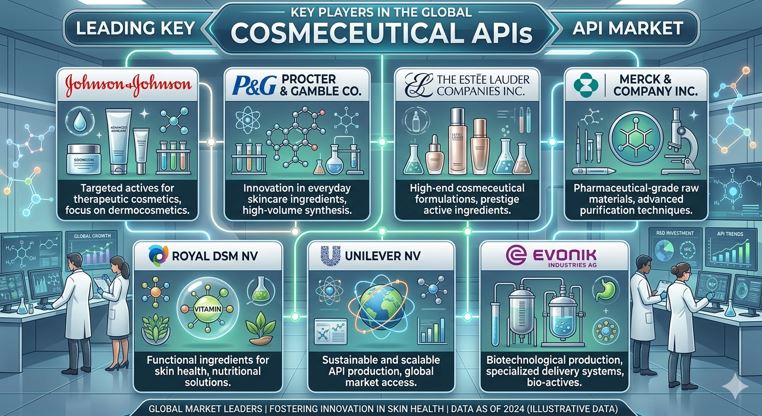
Leading Key Players in the Cosmeceutical API Market
- Johnson & Johnson
- Procter & Gamble Co.
- The Estée Lauder Companies Inc.
- Merck & Company Inc.
- Royal DSM NV
- Unilever NV
- Evonik Industries AG
Cosmeceutical API Market Segmentation
The global cosmeceutical API market is segmented based on type, application, and region. These segmentation categories help manufacturers, suppliers, and investors understand market demand patterns, consumer preferences, and emerging growth opportunities across various product categories. The increasing use of active pharmaceutical ingredients (APIs) in skincare, haircare, and dermatological products has significantly diversified the market. Different types of APIs are used to address specific skin concerns such as aging, acne, pigmentation, hydration, and sun protection. Similarly, applications of cosmeceutical APIs continue to expand due to growing consumer awareness and technological advancements in cosmetic formulations.
By Type Analysis
Based on type, the cosmeceutical API market is segmented into antioxidants, peptides and proteins, retinoids, exfoliants, skin-lightening agents, moisturizers, anti-inflammatory agents, UV filters, and others.
The antioxidants segment holds a significant share in the global market due to the growing demand for products that protect the skin against oxidative stress and environmental damage. Antioxidant APIs such as vitamin C, vitamin E, niacinamide, coenzyme Q10, and green tea extracts are widely used in anti-aging and skin-repair formulations. These ingredients help neutralize free radicals, reduce premature aging, and improve overall skin health.
Peptides and proteins are also gaining strong popularity in the cosmeceutical API market. These ingredients are commonly used in anti-aging and skin-firming products because they stimulate collagen production and improve skin elasticity. Bioactive peptides are increasingly incorporated into premium skincare products due to their ability to reduce wrinkles and support skin regeneration. Continuous advancements in biotechnology are further expanding the use of peptide-based APIs in cosmetic formulations.
Retinoids represent another important segment in the market. Retinoid-based APIs such as retinol and retinoic acid are widely recognized for their effectiveness in reducing acne, pigmentation, and visible signs of aging. These ingredients accelerate cell turnover, improve skin texture, and minimize fine lines and wrinkles. Despite their strong effectiveness, retinoids require careful formulation to minimize skin irritation and sensitivity.
The exfoliants segment includes alpha hydroxy acids (AHAs), beta hydroxy acids (BHAs), and enzymes that help remove dead skin cells and improve skin texture. Increasing consumer interest in skin renewal and brightening products is driving demand for exfoliating APIs in skincare formulations.
Skin-lightening agents are experiencing high demand, particularly in regions where consumers seek products for pigmentation control and complexion enhancement. Ingredients such as kojic acid, arbutin, glutathione, and licorice extract are commonly used in skin-brightening products.
Moisturizing and hydrating APIs such as hyaluronic acid, ceramides, glycerin, and squalene also account for a substantial market share. These ingredients help maintain skin moisture, strengthen the skin barrier, and improve hydration levels. Rising consumer awareness regarding skin hydration and barrier repair is supporting the growth of this segment.
UV filters and anti-inflammatory agents are increasingly used in sunscreen and sensitive-skin formulations. Growing concerns about UV exposure, pollution, and skin sensitivity are encouraging the use of APIs that provide skin protection and soothing benefits.
By Application Analysis
Based on application, the cosmeceutical API market is segmented into skincare, haircare, oral care, sun care, and others.
The skincare segment dominates the global market due to the increasing demand for anti-aging, moisturizing, acne-treatment, and skin-brightening products. Consumers are becoming more focused on preventive skincare and long-term skin health, leading to high adoption of advanced APIs in creams, serums, lotions, masks, and dermatological treatments. Skincare formulations containing peptides, antioxidants, retinoids, and botanical extracts continue to gain strong popularity worldwide.
The haircare segment is witnessing steady growth due to rising concerns related to hair loss, scalp health, dandruff, and hair damage. APIs such as keratin proteins, biotin, amino acids, plant extracts, and anti-inflammatory ingredients are increasingly used in shampoos, conditioners, serums, and scalp treatment products. Growing demand for premium haircare solutions and personalized hair treatments is supporting market expansion.
The oral care segment includes APIs used in toothpaste, mouthwash, whitening products, and gum-care formulations. Active ingredients such as fluoride, herbal extracts, and antimicrobial compounds help improve oral hygiene and address dental concerns. Increasing consumer awareness regarding oral health and cosmetic dentistry is driving demand for advanced oral care products.
Sun care applications are also growing significantly due to increasing awareness regarding UV protection and skin cancer prevention. APIs used in sunscreen products provide broad-spectrum protection against harmful ultraviolet radiation while supporting skin hydration and repair. Rising outdoor activities and concerns regarding photoaging are contributing to the expansion of this segment.
Other applications include nail care, lip care, and dermatological treatments. Continuous product innovation and growing consumer interest in multifunctional personal care products are expected to create further opportunities across these application areas.
Geographical Analysis of Cosmeceutical API Market
The global cosmeceutical API market demonstrates strong geographical diversity, with significant growth opportunities across North America, Europe, Asia-Pacific, Latin America, and the Middle East & Africa. Regional market performance is influenced by factors such as consumer awareness, disposable income, beauty trends, technological advancements, regulatory frameworks, and the presence of cosmetic manufacturing industries.
North America holds a dominant share in the global cosmeceutical API market due to the strong presence of leading cosmetic and pharmaceutical companies, high consumer spending on premium skincare products, and increasing awareness regarding skin health. The United States represents the largest market in the region, supported by advanced dermatological research, rapid adoption of anti-aging products, and growing interest in clinically proven skincare formulations. Consumers in North America are highly informed about cosmetic ingredients and increasingly prefer products containing scientifically validated APIs.
Europe also accounts for a substantial share of the market, driven by strong demand for luxury skincare products, strict quality standards, and growing focus on sustainable beauty solutions. Countries such as Germany, France, the United Kingdom, and Italy are major contributors to regional market growth. European consumers increasingly prefer natural, organic, and eco-friendly cosmetic formulations, encouraging manufacturers to develop plant-based and clean-label APIs. The region is also known for advanced cosmetic research and innovation, particularly in anti-aging and dermatological skincare products.
Asia-Pacific is expected to witness the fastest growth in the global cosmeceutical API market during the forecast period. Rapid urbanization, increasing disposable income, expanding middle-class populations, and growing beauty consciousness are major factors supporting regional market expansion. Countries such as China, Japan, South Korea, and India are emerging as key markets for cosmeceutical products. South Korea and Japan are globally recognized for their advanced skincare innovations and influence on beauty trends such as K-beauty and J-beauty. These trends have increased demand for multifunctional skincare products containing innovative APIs.
China represents one of the largest and fastest-growing beauty markets globally due to rising consumer spending and increasing demand for premium skincare products. India is also witnessing strong market growth due to improving living standards, expanding urban populations, and rising awareness regarding skincare and personal grooming.
Latin America is experiencing steady growth in the cosmeceutical API market, supported by increasing beauty consciousness and rising demand for personal care products. Brazil and Mexico are among the major contributors in the region, with consumers increasingly seeking anti-aging, skin-brightening, and sun-protection products.
The Middle East & Africa region is gradually emerging as a promising market due to increasing urbanization, improving economic conditions, and rising interest in premium beauty products. Growing demand for skincare solutions suitable for hot climates and strong sunlight exposure is encouraging the adoption of advanced cosmeceutical formulations in the region.
FAQ
What are cosmeceutical APIs?
Cosmeceutical APIs (Active Pharmaceutical Ingredients) are biologically active compounds used in cosmetic and personal care products that provide therapeutic or functional skin benefits beyond basic beautification. These ingredients are commonly found in anti-aging creams, serums, sunscreens, moisturizers, acne treatments, and haircare products.
What factors are driving the growth of the cosmeceutical API market?
The market is primarily driven by increasing consumer awareness regarding skincare, rising demand for anti-aging products, technological advancements in cosmetic formulations, growing popularity of natural and organic ingredients, and expanding demand for personalized skincare solutions.
Which region dominates the global cosmeceutical API market?
North America currently holds a significant share of the global cosmeceutical API market due to high consumer spending on premium skincare products and strong presence of leading cosmetic companies. However, Asia-Pacific is expected to witness the fastest growth due to rising disposable income, urbanization, and increasing beauty consciousness.
What are the major applications of cosmeceutical APIs?
Cosmeceutical APIs are widely used in skincare, haircare, oral care, and sun care products. Skincare applications dominate the market, especially in anti-aging, hydration, acne treatment, skin brightening, and UV protection formulations.
What challenges does the cosmeceutical API market face?
Major challenges include strict regulatory requirements, high research and development costs, safety concerns regarding certain active ingredients, intense market competition, and fluctuations in raw material availability. Manufacturers must also ensure product efficacy, transparency, and compliance with global cosmetic regulations.
