
Global Yacon Syrup Market Introduction
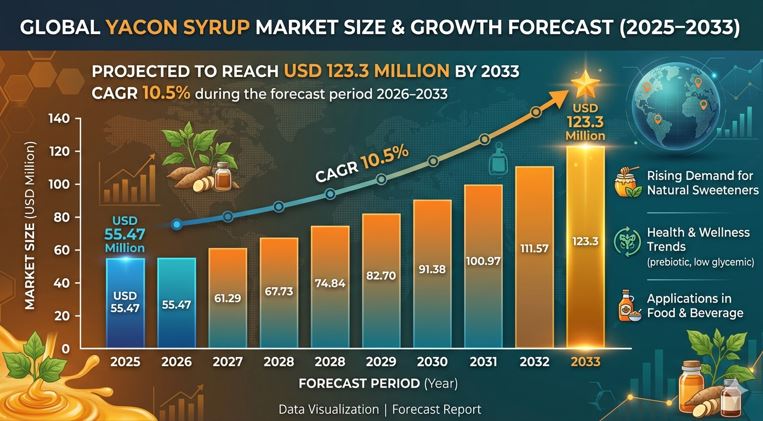
Global Yacon Syrup Market size was valued at USD 55.47 Million in 2025 to USD 123.3 Million by 2033, growing at a CAGR of 10.5% during the forecast period 2026-2033.
The global yacon syrup market has gained significant attention in recent years due to the rising consumer preference for natural and healthy sweeteners. Yacon syrup is derived from the roots of the yacon plant, scientifically known as Smallanthus sonchifolius, which is native to the Andes region of South America. The syrup is widely recognized for its low-calorie content and high concentration of fructooligosaccharides (FOS), a type of prebiotic fiber that supports digestive health. As consumers become increasingly health-conscious and seek alternatives to refined sugar and artificial sweeteners, yacon syrup has emerged as a promising product in the global functional food and beverage industry.
One of the major factors driving the growth of the yacon syrup market is the increasing prevalence of lifestyle-related diseases such as obesity, diabetes, and cardiovascular disorders. Consumers are actively shifting toward healthier diets and low-glycemic food products, creating strong demand for natural sugar substitutes. Yacon syrup is particularly appealing because it has a lower glycemic index compared to conventional sweeteners, making it suitable for diabetic and weight-management diets. In addition, its prebiotic properties help improve gut health, which has become an important focus area in modern nutrition trends.
The growing popularity of organic and plant-based food products is also contributing to the expansion of the yacon syrup market. Manufacturers are increasingly incorporating yacon syrup into energy bars, dietary supplements, yogurts, beverages, baked goods, and health snacks. The demand for clean-label products with minimal processing and natural ingredients has encouraged food companies to use yacon syrup as a healthier alternative to corn syrup and refined sugar. Furthermore, the rising vegan population worldwide has strengthened the market for plant-derived sweeteners, further boosting yacon syrup consumption.
Geographically, North America and Europe represent significant markets for yacon syrup due to growing awareness regarding healthy eating habits and increasing demand for functional foods. Consumers in these regions are more willing to spend on premium organic products, which supports market growth. Meanwhile, the Asia-Pacific region is expected to witness rapid expansion over the forecast period due to increasing urbanization, rising disposable incomes, and changing dietary preferences. Countries such as Japan, China, and India are experiencing growing interest in natural health products and nutritional supplements, creating new opportunities for market players.
Despite its positive growth outlook, the yacon syrup market faces certain challenges. Limited consumer awareness in developing regions, high production costs, and supply chain constraints can restrict market expansion. Since yacon cultivation is concentrated in specific geographic areas, fluctuations in agricultural production and climatic conditions may impact supply and pricing. Additionally, competition from other natural sweeteners such as stevia, monk fruit, maple syrup, and agave nectar poses a challenge to market penetration.
The global yacon syrup market is expected to experience steady growth in the coming years, driven by increasing health awareness, demand for natural sweeteners, and expanding applications in the food and beverage sector. As innovation and product development continue, yacon syrup is likely to become an important ingredient in the global health and wellness industry.
Key Yacon Syrup Market Dynamics
The global yacon syrup market is witnessing notable growth due to changing consumer lifestyles, increasing awareness regarding healthy food alternatives, and the rising demand for natural sweeteners. Market dynamics refer to the various factors that influence the growth, opportunities, challenges, and overall development of the yacon syrup industry. These dynamics include market drivers, restraints, opportunities, and emerging trends that collectively shape the competitive landscape and future outlook of the market.
One of the primary drivers of the yacon syrup market is the increasing consumer focus on health and wellness. Growing concerns about obesity, diabetes, and other lifestyle-related diseases have encouraged consumers to reduce sugar consumption and adopt healthier dietary habits. Yacon syrup, known for its low glycemic index and low-calorie composition, is becoming a preferred alternative to conventional sugar and artificial sweeteners. The product contains fructooligosaccharides (FOS), which function as prebiotics and support digestive health, making it highly attractive among health-conscious consumers.
Another important market driver is the rising demand for natural and organic food products. Consumers are increasingly seeking clean-label products that are minimally processed and free from synthetic additives. This trend has boosted the use of yacon syrup in organic food products, functional beverages, dietary supplements, and nutritional snacks. The growing vegan and plant-based food movement has also positively impacted the market, as yacon syrup is plant-derived and aligns well with vegan dietary preferences.
The expanding application of yacon syrup in the food and beverage industry further supports market growth. Manufacturers are incorporating the syrup into products such as cereals, granola bars, bakery items, smoothies, yogurts, and sugar-free desserts. Its mild sweetness and nutritional benefits make it suitable for a wide range of food formulations. In addition, the increasing popularity of functional foods and beverages has created opportunities for companies to develop innovative products using yacon syrup as a key ingredient.
Despite strong growth potential, the market also faces several challenges. One major restraint is the limited awareness of yacon syrup in developing economies. Many consumers are still unfamiliar with the product and its health benefits, which can limit market penetration. Additionally, yacon syrup is relatively expensive compared to traditional sweeteners due to limited cultivation and complex extraction processes. The higher cost may discourage price-sensitive consumers from adopting the product on a large scale.
Supply chain limitations and agricultural dependency also affect market dynamics. Yacon plants are mainly cultivated in specific regions of South America, and production can be influenced by climatic conditions, seasonal variations, and farming practices. Any disruption in crop yield or export activities may impact the global supply and pricing of yacon syrup. Furthermore, competition from alternative natural sweeteners such as stevia, agave syrup, monk fruit sweeteners, and maple syrup poses a challenge for market players.
However, the market presents promising opportunities for future growth. Increasing investments in research and product innovation are expected to expand the applications of yacon syrup across various industries. Growing e-commerce penetration and digital marketing strategies are also helping manufacturers reach a wider consumer base globally. As awareness regarding gut health and natural nutrition continues to rise, the demand for yacon syrup is expected to increase steadily in the coming years, strengthening its position in the global natural sweetener market.
Key Yacon Syrup Market Restraints
Despite the growing popularity of natural sweeteners and functional food ingredients, the global yacon syrup market faces several restraints that may hinder its expansion over the forecast period. These challenges are associated with production limitations, consumer awareness, pricing concerns, regulatory barriers, and strong competition from alternative sweeteners. Understanding these restraints is essential for market participants to develop effective strategies and sustain long-term growth in the industry.
One of the major restraints affecting the yacon syrup market is the limited awareness among consumers, particularly in developing and emerging economies. Although yacon syrup is recognized in health-conscious markets for its low glycemic index and digestive health benefits, many consumers are still unfamiliar with the product and its nutritional advantages. In several countries, traditional sweeteners such as sugar, honey, and jaggery continue to dominate consumption patterns. The lack of promotional activities and insufficient market education regarding yacon syrup’s functional properties restrict its adoption on a broader scale.
Another significant challenge is the high production and processing cost associated with yacon syrup. Yacon roots require specific climatic and agricultural conditions for cultivation, limiting production mainly to South American countries such as Peru and Bolivia. The extraction and processing of syrup from yacon roots involve specialized methods to preserve its fructooligosaccharide (FOS) content and nutritional quality. These production complexities increase overall manufacturing costs, making yacon syrup more expensive than conventional sweeteners. As a result, price-sensitive consumers may prefer cheaper alternatives, reducing the product’s mass-market appeal.
Supply chain limitations and dependency on agricultural production also act as major restraints in the market. Since yacon cultivation is geographically concentrated, fluctuations in crop production caused by climate change, droughts, pests, or unfavorable weather conditions can impact the availability and pricing of raw materials. Transportation and export-related challenges may further disrupt global supply chains, especially in regions heavily dependent on imported yacon syrup products. Limited large-scale farming infrastructure and lower production volumes also contribute to supply instability.
The market additionally faces intense competition from other natural and low-calorie sweeteners. Products such as stevia, monk fruit sweeteners, agave nectar, maple syrup, and coconut sugar are already well-established in the global market and enjoy strong consumer recognition. Many of these alternatives are more widely available and often offered at lower prices. Established food and beverage manufacturers may prefer these familiar ingredients over yacon syrup due to existing supply networks and consumer demand. This competitive pressure can restrict the market share growth of yacon syrup manufacturers.
Regulatory and labeling challenges may also slow market expansion. Different countries have varying food safety regulations and standards related to natural sweeteners, nutritional claims, and functional ingredients. Manufacturers must comply with strict approval procedures, quality certifications, and labeling requirements before introducing products into international markets. These regulations can increase operational costs and delay product launches, especially for small and medium-sized enterprises.
Another restraint is the limited shelf life and storage sensitivity of yacon syrup compared to some other sweeteners. Improper storage conditions may affect product quality, taste, and nutritional composition, creating additional challenges in transportation and retail distribution. Furthermore, excessive consumption of yacon syrup may cause digestive discomfort in some individuals due to its high fructooligosaccharide content, which may discourage repeat usage among certain consumers.
Yacon Syrup Market Opportunities
The global yacon syrup market presents substantial growth opportunities due to increasing health awareness, rising demand for natural sweeteners, and expanding applications across the food and beverage industry. As consumers continue shifting toward healthier lifestyles and functional nutrition, yacon syrup manufacturers and suppliers are expected to benefit from emerging market trends and evolving consumer preferences. The market’s future potential is supported by innovation, growing e-commerce channels, and increasing interest in plant-based and clean-label products.
One of the most significant opportunities in the yacon syrup market lies in the growing consumer demand for low-calorie and diabetic-friendly sweeteners. With the rising prevalence of obesity, diabetes, and cardiovascular diseases worldwide, consumers are actively reducing their intake of refined sugar and artificial sweeteners. Yacon syrup, which has a lower glycemic index and contains beneficial fructooligosaccharides (FOS), is gaining popularity as a healthier alternative. This creates a strong opportunity for manufacturers to position yacon syrup as a functional sweetener suitable for health-conscious consumers, diabetics, and weight-management diets.
The rapid expansion of the functional food and beverage industry is another major opportunity for market growth. Functional foods enriched with digestive health benefits, natural ingredients, and nutritional value are increasingly in demand across global markets. Yacon syrup’s prebiotic properties support gut health by promoting beneficial intestinal bacteria, making it an attractive ingredient for health-focused food products. Manufacturers can capitalize on this trend by incorporating yacon syrup into energy bars, breakfast cereals, dairy alternatives, smoothies, yogurts, protein supplements, and sugar-free beverages.
The rising popularity of vegan, organic, and plant-based diets also creates favorable conditions for the yacon syrup market. Consumers are increasingly seeking plant-derived ingredients that align with sustainable and ethical consumption patterns. Since yacon syrup is a natural plant-based sweetener with minimal processing requirements, it fits well within vegan and organic product categories. This trend opens opportunities for companies to develop premium organic yacon syrup products and target niche consumer segments focused on clean-label nutrition.
Emerging economies in Asia-Pacific, Latin America, and the Middle East provide untapped market potential for yacon syrup manufacturers. Increasing disposable incomes, urbanization, and changing dietary habits are encouraging consumers in these regions to explore healthier food alternatives. Growing awareness regarding digestive health and nutritional supplements is expected to boost demand for functional sweeteners. Expanding retail networks and online distribution channels can help manufacturers penetrate these developing markets more effectively.
E-commerce and digital marketing platforms also offer considerable growth opportunities for the yacon syrup industry. Online retailing enables manufacturers to reach a broader customer base while educating consumers about the product’s health benefits. Social media campaigns, influencer marketing, and health-focused promotional strategies can significantly increase product awareness and consumer engagement. Small and medium-sized enterprises can especially benefit from digital platforms by entering international markets without requiring extensive physical distribution infrastructure.
Research and development activities aimed at product innovation are expected to create additional opportunities in the market. Companies can focus on developing flavored yacon syrups, blended sweetener products, and new functional formulations for sports nutrition and wellness applications. Improvements in cultivation methods and processing technologies may also help reduce production costs and enhance product quality, making yacon syrup more accessible to mainstream consumers.
Yacon Syrup Market Drivers
The global yacon syrup market is experiencing significant growth due to several important driving factors that are shaping consumer preferences and industry demand. Yacon syrup, a natural sweetener extracted from the roots of the yacon plant, is gaining popularity because of its nutritional benefits and low-calorie properties. Increasing health awareness, growing demand for natural food ingredients, and the expansion of the functional food industry are among the key drivers accelerating the growth of the yacon syrup market worldwide.
One of the primary drivers of the market is the rising prevalence of lifestyle-related diseases such as obesity, diabetes, and cardiovascular disorders. Consumers across the world are becoming more conscious of the harmful effects of excessive sugar consumption and are actively seeking healthier alternatives. Yacon syrup contains fewer calories than refined sugar and has a lower glycemic index, making it suitable for diabetic individuals and consumers aiming to manage body weight. The syrup’s natural composition and ability to support healthier dietary habits have significantly increased its demand in health-conscious populations.
Another major factor driving market growth is the increasing consumer preference for natural and organic products. Modern consumers are carefully examining food labels and choosing products that are free from artificial additives, preservatives, and synthetic sweeteners. Yacon syrup fits well within the clean-label movement because it is plant-based, minimally processed, and naturally derived. The growing trend toward organic foods and beverages has encouraged manufacturers to incorporate yacon syrup into a wide range of health-oriented products, including nutritional bars, cereals, beverages, and dietary supplements.
The expanding functional food and beverage industry is also contributing strongly to market growth. Functional foods are products that provide additional health benefits beyond basic nutrition, and yacon syrup is widely valued for its prebiotic properties. The syrup contains fructooligosaccharides (FOS), which help promote beneficial gut bacteria and improve digestive health. As consumers increasingly prioritize gut health and immunity, demand for prebiotic-rich foods and beverages continues to rise. This trend has created opportunities for food manufacturers to develop innovative products containing yacon syrup as a functional ingredient.
The growing vegan and plant-based food movement is another important market driver. Consumers are shifting toward plant-based diets for health, environmental, and ethical reasons. Since yacon syrup is entirely plant-derived, it serves as an ideal sweetening option for vegan and vegetarian consumers. Food companies are increasingly using yacon syrup in vegan bakery products, dairy alternatives, smoothies, and plant-based snacks to meet rising consumer demand for sustainable and cruelty-free ingredients.
In addition, the rapid growth of e-commerce and online retail platforms has positively influenced the yacon syrup market. Consumers now have easier access to specialty health products through online stores and digital marketplaces. Online marketing campaigns, wellness blogs, and social media influencers have also played a significant role in educating consumers about the health benefits of yacon syrup. This increased visibility has helped expand the product’s customer base globally.
Technological advancements in food processing and agricultural practices are further supporting market development. Improved extraction techniques and better cultivation methods are enhancing product quality and production efficiency. These innovations may help manufacturers reduce costs and improve supply consistency in the future.
Yacon Syrup Market Trends
The global yacon syrup market is evolving rapidly due to changing consumer lifestyles, growing health awareness, and innovation within the food and beverage industry. Yacon syrup, known for its low-calorie content and digestive health benefits, has become increasingly popular among consumers seeking natural alternatives to refined sugar. Several emerging trends are shaping the development of the market, influencing product demand, manufacturing strategies, and consumer purchasing behavior across different regions.
One of the most important trends in the yacon syrup market is the increasing demand for natural and clean-label sweeteners. Consumers are becoming more cautious about the ingredients used in food products and are actively avoiding artificial additives and chemically processed sweeteners. This shift toward transparency and natural nutrition has encouraged manufacturers to promote yacon syrup as a plant-based and minimally processed sweetening solution. The clean-label movement has significantly increased the use of yacon syrup in organic food products, beverages, and health supplements.
Another major trend influencing the market is the growing focus on digestive health and gut wellness. Yacon syrup contains fructooligosaccharides (FOS), which function as prebiotics and help support beneficial gut bacteria. As awareness regarding gut microbiome health continues to rise, consumers are seeking foods and ingredients that improve digestion and overall wellness. This trend has led to the increased incorporation of yacon syrup into functional foods such as yogurt products, nutritional drinks, dietary supplements, and high-fiber snacks. The popularity of gut-health-focused diets is expected to further strengthen demand for prebiotic-rich ingredients like yacon syrup.
The rise of veganism and plant-based diets is also shaping the yacon syrup market. Consumers worldwide are increasingly adopting plant-based lifestyles for health, ethical, and environmental reasons. Yacon syrup aligns well with vegan and vegetarian dietary preferences because it is naturally derived from plants and free from animal-based ingredients. Food manufacturers are introducing vegan bakery products, dairy-free beverages, and plant-based snacks sweetened with yacon syrup to attract a growing customer base focused on sustainable and cruelty-free consumption.
Another significant market trend is the increasing demand for low-calorie and diabetic-friendly food products. Rising cases of obesity and diabetes have encouraged consumers to reduce sugar intake and choose healthier alternatives. Yacon syrup is gaining popularity among health-conscious individuals because of its lower glycemic index compared to conventional sugar. As consumers prioritize weight management and blood sugar control, food manufacturers are increasingly using yacon syrup in sugar-free and reduced-calorie products.
The expansion of e-commerce and online health retail platforms is also transforming the yacon syrup market. Consumers can now easily access specialty health products through digital marketplaces and online grocery stores. Social media influencers, fitness experts, and nutrition bloggers are playing an important role in promoting the health benefits of yacon syrup, contributing to increased consumer awareness and product adoption. Online marketing strategies are helping both established brands and small businesses reach international consumers more effectively.
Innovation in product development is another key trend in the market. Companies are introducing flavored yacon syrups, blended natural sweeteners, and fortified functional products to meet evolving consumer preferences. Manufacturers are also investing in sustainable packaging and eco-friendly production practices to appeal to environmentally conscious buyers.
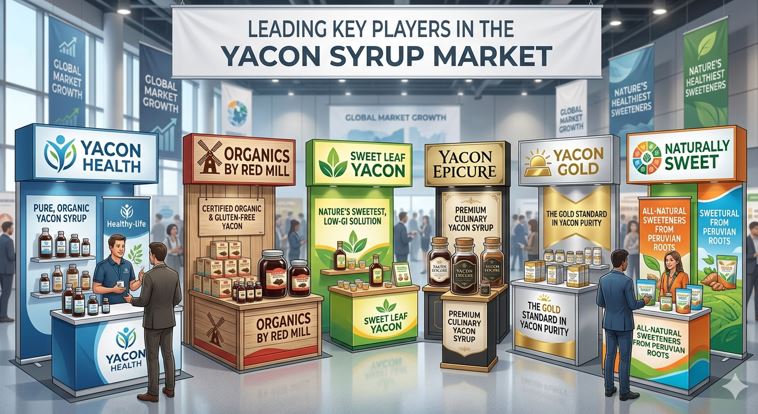
Leading Key Players in the Yacon Syrup Market
- Yacon Health
- Organics by Red Mill
- Sweet Leaf Yacon
- Yacon Epicure
- Yacon Gold
- Naturally Sweet
- Earthy Delights
- Pure Yacon
- Yacon Goodness
- Yacon Farms
- Superfood Essentials
- Nature’s Way
- Yacon Boutique
Yacon Syrup Market Segmentation
The global yacon syrup market is segmented based on type, application, and geography. These segments help in understanding the market structure, consumer preferences, and growth opportunities across different categories. Increasing awareness regarding natural sweeteners and functional food ingredients has expanded the use of yacon syrup in several industries, leading to diversified market segmentation. The growing demand for low-calorie, plant-based, and digestive-health-focused products is also influencing the expansion of various market segments worldwide.
By Type Analysis
Based on type, the yacon syrup market can be segmented into organic yacon syrup and conventional yacon syrup. Among these, the organic yacon syrup segment is witnessing strong growth due to increasing consumer preference for chemical-free and naturally cultivated food products. Consumers are becoming more health-conscious and are actively seeking organic alternatives that are free from pesticides, artificial additives, and genetically modified ingredients. Organic yacon syrup is widely preferred in premium health food products and specialty wellness markets because it aligns with clean-label and sustainable consumption trends.
The demand for organic yacon syrup is particularly high in developed regions such as North America and Europe, where consumers are willing to spend more on certified organic products. Manufacturers are increasingly focusing on obtaining organic certifications and improving sustainable farming practices to strengthen their market presence. The expansion of organic retail stores and online health product platforms has further contributed to the growth of this segment.
On the other hand, the conventional yacon syrup segment also holds a considerable share in the market due to its affordability and wider availability. Conventional yacon syrup is commonly used in commercial food production where manufacturers prioritize cost efficiency and large-scale supply. This segment is popular in developing regions where consumers are more price-sensitive and less focused on organic certifications. Despite slower growth compared to the organic segment, conventional yacon syrup continues to maintain stable demand due to its accessibility and broader distribution networks.
Manufacturers in both segments are investing in product quality improvement and innovative packaging solutions to attract consumers. Additionally, the rising popularity of functional sweeteners and digestive health products is expected to support growth across both organic and conventional yacon syrup categories in the coming years.
By Application Analysis
Based on application, the yacon syrup market is segmented into food and beverages, dietary supplements, pharmaceuticals, and personal care products. The food and beverages segment accounts for the largest market share due to the increasing use of yacon syrup as a natural sweetener in various food formulations. Manufacturers are incorporating yacon syrup into bakery products, cereals, snack bars, smoothies, yogurts, desserts, and sugar-free beverages. Its low-calorie nature and prebiotic properties make it highly suitable for functional and health-oriented food products.
The growing consumer demand for clean-label and low-sugar food products has significantly boosted the adoption of yacon syrup in the food and beverage industry. In addition, the increasing popularity of vegan and plant-based diets has encouraged food companies to use yacon syrup as a plant-derived sweetening ingredient in organic and specialty foods.
The dietary supplements segment is also experiencing rapid growth due to increasing awareness regarding digestive health and nutritional wellness. Yacon syrup contains fructooligosaccharides (FOS), which help improve gut health by promoting beneficial intestinal bacteria. As a result, dietary supplement manufacturers are using yacon syrup in fiber supplements, wellness powders, immunity boosters, and digestive health products. Rising consumer interest in preventive healthcare and natural nutrition is expected to further strengthen this segment.
The pharmaceutical segment is gradually expanding as research highlights the health benefits associated with yacon syrup consumption. The syrup is being explored for its potential role in supporting blood sugar management, digestive wellness, and weight control. Pharmaceutical companies are investing in research and development activities to examine the therapeutic applications of yacon-based ingredients.
The personal care and cosmetics segment represents an emerging application area for yacon syrup. Manufacturers are exploring the use of natural plant-based ingredients in skincare and cosmetic formulations due to increasing consumer preference for organic beauty products. Yacon extracts may be incorporated into skincare products because of their antioxidant and moisturizing properties.
Geographical Analysis of Yacon Syrup Market
Geographically, the global yacon syrup market is segmented into North America, Europe, Asia-Pacific, Latin America, and the Middle East & Africa. North America holds a significant share of the market due to increasing consumer awareness regarding healthy eating habits and rising demand for natural sweeteners. The United States and Canada are key contributors to regional growth, supported by the strong presence of organic food industries and functional beverage manufacturers.
Europe is another major market for yacon syrup, driven by growing demand for clean-label, low-calorie, and plant-based food products. Countries such as Germany, the United Kingdom, and France are witnessing increased consumption of functional foods and organic nutritional products, creating strong growth opportunities for yacon syrup manufacturers.
The Asia-Pacific region is expected to experience the fastest growth during the forecast period. Rapid urbanization, rising disposable incomes, and changing dietary preferences are encouraging consumers to adopt healthier lifestyles. Countries such as China, Japan, India, and South Korea are increasingly embracing natural health products and dietary supplements, contributing to regional market expansion.
Latin America represents an important production region because yacon plants are primarily cultivated in countries such as Peru and Bolivia. The region plays a vital role in global supply and export activities. Meanwhile, the Middle East & Africa market is gradually growing due to increasing health awareness and expanding demand for specialty wellness products.
FAQ
1. What is yacon syrup?
Yacon syrup is a natural sweetener extracted from the roots of the yacon plant, native to South America. It is known for its low-calorie content and high concentration of fructooligosaccharides (FOS), which support digestive health and act as prebiotics.
2. Why is yacon syrup becoming popular in the global market?
Yacon syrup is gaining popularity due to increasing consumer demand for natural and low-calorie sweeteners. Rising health concerns related to obesity, diabetes, and excessive sugar consumption are encouraging consumers to choose healthier alternatives such as yacon syrup.
3. What are the major applications of yacon syrup?
Yacon syrup is widely used in food and beverages, dietary supplements, pharmaceuticals, and personal care products. It is commonly added to bakery products, health drinks, snack bars, yogurts, and nutritional supplements because of its natural sweetness and digestive health benefits.
4. Which regions are leading the yacon syrup market?
North America and Europe are major markets for yacon syrup due to strong demand for organic and functional food products. Meanwhile, the Asia-Pacific region is expected to witness rapid growth because of increasing health awareness, urbanization, and changing dietary preferences.
5. What are the key challenges in the yacon syrup market?
Some major challenges in the yacon syrup market include high production costs, limited consumer awareness in developing regions, supply chain limitations, and strong competition from alternative natural sweeteners such as stevia, agave syrup, and monk fruit sweeteners.
