
Global Nutritious Mixed Nut Market Introduction
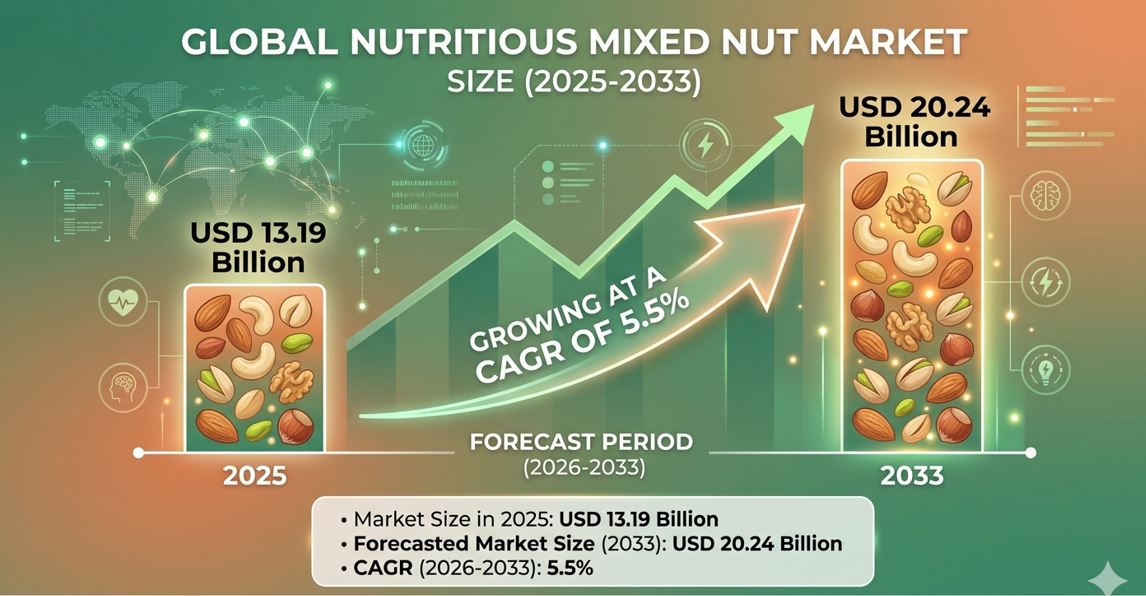
Global Nutritious Mixed Nut Market size is grow from USD 13.19 Billion in 2025 to USD 20.24 Billion by 2033, growing at a CAGR of 5.5% during the forecast period (2026-2033).
The global nutritious mixed nut market has emerged as a significant segment within the broader health foods and snack industry, driven by increasing consumer awareness of wellness, preventive healthcare, and balanced nutrition. Mixed nuts typically a blend of almonds, walnuts, cashews, pistachios, hazelnuts, Brazil nuts, and peanuts are widely recognized as nutrient-dense foods that provide essential proteins, healthy fats, dietary fiber, vitamins, and minerals. Their rising popularity reflects a broader shift in global dietary preferences toward natural, minimally processed, and functional foods.
Over the past decade, the demand for mixed nuts has expanded beyond traditional consumption patterns, transitioning from occasional snacking to a regular part of daily diets. This change has been influenced by growing concerns regarding lifestyle-related diseases such as obesity, diabetes, and cardiovascular disorders. Health professionals and nutritionists frequently recommend nuts as part of balanced diets, particularly due to their ability to support heart health, improve cholesterol levels, and enhance overall metabolic function. As a result, mixed nuts are no longer viewed as luxury snacks but as essential components of modern nutrition plans.
One of the key drivers of the global nutritious mixed nut market is the increasing adoption of plant-based diets. Consumers are actively seeking alternative protein sources that are both sustainable and nutritionally rich. Nuts serve as an excellent plant-based protein source, making them highly appealing to vegetarians, vegans, and flexitarians. Additionally, the rising trend of clean-label products has encouraged manufacturers to offer mixed nut products without artificial preservatives, added sugars, or excessive salt, further enhancing their appeal among health-conscious consumers.
Urbanization and busy lifestyles have also contributed significantly to market growth. With limited time for meal preparation, consumers are increasingly opting for convenient and portable snack options that provide sustained energy. Mixed nuts fit this requirement perfectly, as they are easy to store, require no preparation, and offer long-lasting satiety. This has led to their widespread adoption as on-the-go snacks, office refreshments, and even pre- or post-workout nutrition supplements.
The market is also benefiting from innovation in product formulation and packaging. Manufacturers are introducing a variety of flavored mixed nuts, including roasted, salted, spiced, honey-coated, and organic variants to cater to diverse taste preferences. In addition, portion-controlled packaging such as single-serve packs and resealable pouches has improved convenience and freshness, making these products more appealing to modern consumers. Premiumization is another notable trend, with high-quality exotic nut blends being marketed as gourmet and gift items, particularly during festive seasons.
From a regional perspective, North America and Europe have traditionally dominated the nutritious mixed nut market due to higher health awareness, strong purchasing power, and established retail infrastructure. However, Asia-Pacific is rapidly emerging as a key growth region, driven by rising disposable incomes, urban population growth, and increasing exposure to global dietary trends. Countries such as India and China are witnessing strong demand, particularly among middle-class consumers who are incorporating nuts into both traditional and modern diets.
E-commerce has also played a transformative role in the expansion of the mixed nut market. Online retail platforms have made it easier for consumers to access a wide range of products, compare brands, and benefit from subscription-based delivery models. Digital marketing and influencer-driven health campaigns have further boosted awareness about the nutritional benefits of mixed nuts, accelerating market penetration among younger demographics.
Despite its strong growth trajectory, the market faces certain challenges. Price volatility of raw nuts due to climatic conditions, agricultural yield fluctuations, and supply chain disruptions can impact product pricing and availability. Additionally, concerns related to allergies associated with nuts remain a limiting factor for certain consumer segments. However, ongoing advancements in food processing, quality control, and allergen management are helping mitigate some of these issues.
Key Nutritious Mixed Nut Market Dynamics
The nutritious mixed nut market is shaped by a combination of demand-side and supply-side forces that collectively influence its growth trajectory, pricing structure, product innovation, and global distribution. These dynamics are closely linked to changing consumer behavior, macroeconomic conditions, agricultural output, and advancements in food processing technologies.
One of the most significant demand-side drivers is the increasing global emphasis on health and wellness. Consumers are becoming more proactive about their dietary choices, prioritizing foods that offer functional health benefits. Mixed nuts, known for their high content of unsaturated fats, plant-based protein, fiber, antioxidants, and essential micronutrients, are widely perceived as a “superfood.” This perception has significantly boosted their incorporation into daily diets, particularly as substitutes for high-calorie, processed snacks.
Another key dynamic is the rise of convenience-oriented consumption patterns. Busy urban lifestyles have led to higher demand for ready-to-eat, portable snack options. Mixed nuts are naturally suited to this trend due to their long shelf life, ease of consumption, and minimal preparation requirements. This has encouraged manufacturers to expand product offerings in convenient packaging formats such as resealable pouches, single-serve packs, and on-the-go snack bars.
On the supply side, agricultural production plays a critical role in shaping market stability. The availability and pricing of key nuts such as almonds, cashews, walnuts, and pistachios are highly dependent on climatic conditions, water availability, and regional farming practices. Any disruptions in major producing regions can lead to price fluctuations, directly affecting global supply chains and retail pricing strategies. As a result, companies often diversify sourcing locations to reduce dependency risks.
Product innovation is another major dynamic influencing the market. Manufacturers are continuously experimenting with flavor enhancements, nutritional fortification, and organic or non-GMO certifications to meet evolving consumer preferences. The introduction of premium and gourmet mixed nut blends has also contributed to market segmentation, allowing brands to target both mass-market and high-income consumer groups.
Distribution channels are also undergoing rapid transformation. While traditional retail outlets such as supermarkets and convenience stores remain important, online sales channels are experiencing faster growth. E-commerce platforms provide broader product visibility, competitive pricing, and subscription-based purchasing models, which have significantly expanded market reach.
Lastly, regulatory standards and food safety compliance are increasingly shaping market operations. Governments and food safety authorities across regions enforce strict guidelines on labeling, allergen disclosure, and quality control, ensuring consumer safety and product transparency. These regulations, while sometimes increasing operational costs, also enhance consumer trust and brand credibility.
Key Nutritious Mixed Nut Market Restraints
Despite the strong growth trajectory of the global nutritious mixed nut market, several restraints continue to challenge its expansion. These limitations arise from supply chain vulnerabilities, price volatility, consumer health concerns, environmental constraints, and regulatory complexities. Together, these factors can slow market penetration, increase operational costs, and restrict accessibility in certain regions.
One of the most prominent restraints is the high price volatility of raw nuts. The production of key ingredients such as almonds, cashews, walnuts, pistachios, and hazelnuts is highly dependent on climatic conditions, rainfall patterns, and seasonal agricultural yields. Adverse weather events such as droughts, floods, and unseasonal frosts can significantly reduce crop output, leading to sudden spikes in global prices. For example, regions like California (a major almond producer) and parts of Asia responsible for cashew cultivation often face environmental challenges that directly affect supply consistency. This unpredictability makes it difficult for manufacturers to maintain stable pricing, ultimately impacting retail affordability and consumer demand.
Another major restraint is the vulnerability of global supply chains. The mixed nut industry relies heavily on international trade networks for sourcing, processing, and distribution. Disruptions caused by geopolitical tensions, trade restrictions, transportation delays, or pandemics can severely impact the availability of raw materials and finished goods. The COVID-19 pandemic, for instance, exposed weaknesses in global food supply chains, leading to logistical bottlenecks and increased shipping costs. Such disruptions not only reduce profit margins for manufacturers but also lead to inconsistent product availability in retail markets.
Allergen concerns also pose a significant barrier to market growth. Nuts are among the most common food allergens globally, and even trace amounts can trigger severe allergic reactions in sensitive individuals. This has led to cautious consumption behavior among certain consumer groups and stricter labeling requirements by regulatory authorities. Food manufacturers are required to implement stringent allergen management protocols, which increases production complexity and compliance costs. In addition, fear of cross-contamination in manufacturing facilities may deter some consumers from purchasing mixed nut products altogether.
Environmental sustainability issues further constrain market expansion. Nut cultivation is resource-intensive, particularly in terms of water usage. Almond farming, for example, is widely criticized for its high water consumption, especially in drought-prone regions. As global water scarcity concerns intensify, sustainable agricultural practices are becoming increasingly important. However, transitioning to eco-friendly farming methods often requires significant investment and time, which can slow down production scalability and increase operational expenses for suppliers.
Another restraint is the relatively high cost of premium mixed nut products compared to other snack alternatives. While nuts are nutrient-rich, they are often priced higher than processed snacks such as chips, biscuits, and confectionery items. This price disparity limits their accessibility, particularly in price-sensitive markets across developing regions. Consumers with lower disposable incomes may prioritize cheaper snack options, thereby restricting the penetration of mixed nuts in certain demographic segments.
Regulatory compliance and quality standards also add complexity to market operations. Different countries enforce varying regulations regarding food safety, packaging, labeling, and import-export requirements. Navigating these diverse regulatory frameworks can be challenging for multinational manufacturers. Compliance with organic certification, non-GMO labeling, and nutritional claims requires rigorous testing and documentation, increasing both time and cost burdens.
Lastly, limited awareness in some emerging markets acts as a restraint. While mixed nuts are widely recognized in developed economies for their health benefits, consumers in certain regions may still perceive them as luxury or occasional snacks rather than daily dietary essentials. This lack of awareness reduces consumption frequency and slows market growth in untapped regions.
The nutritious mixed nut market continues to expand globally, it faces several structural and operational restraints. Price volatility, supply chain disruptions, allergen risks, environmental concerns, high product costs, regulatory challenges, and limited consumer awareness collectively hinder its full growth potential. Addressing these issues through sustainable sourcing, improved logistics, consumer education, and innovation will be crucial for long-term market stability and expansion.
Nutritious Mixed Nut Market Opportunities
The global nutritious mixed nut market presents strong growth opportunities driven by shifting consumer preferences, expanding health awareness, and continuous innovation in food products. As consumers increasingly prioritize wellness-oriented diets, the demand for nutrient-dense, plant-based snacks is expected to rise significantly across both developed and emerging economies.
One of the most promising opportunities lies in the growing adoption of plant-based and vegan diets. With more consumers reducing or eliminating animal-based products, nuts are becoming a key source of protein, healthy fats, and essential nutrients. Mixed nuts offer a convenient and balanced plant-based alternative, making them highly attractive to vegetarians, vegans, and flexitarians. This trend is expected to further expand as environmental sustainability concerns encourage lower consumption of animal-derived foods.
Another major opportunity is product innovation and diversification. Manufacturers are increasingly developing new product variants such as flavored mixed nuts, organic blends, roasted assortments, and functional nut mixes enriched with superfoods like seeds, dried fruits, and probiotics. These innovations not only enhance taste and variety but also cater to specific consumer needs such as energy boosting, weight management, and heart health support. Premiumization of nut products is also creating opportunities in the gifting and luxury snack segments, especially during festive seasons.
The expansion of e-commerce and digital retail channels also offers significant growth potential. Online platforms enable brands to reach a wider consumer base, including remote and underserved regions. Subscription-based models, direct-to-consumer sales, and personalized nutrition offerings are becoming increasingly popular. Additionally, digital marketing strategies and influencer-led health campaigns are helping to raise awareness about the benefits of mixed nuts, especially among younger consumers.
Emerging markets present another strong opportunity for expansion. Rapid urbanization, rising disposable incomes, and growing awareness of healthy eating habits in regions such as Asia-Pacific, Latin America, and parts of Africa are driving demand for nutritious snacks. As consumers in these regions shift away from traditional high-carbohydrate diets, mixed nuts are gaining acceptance as a modern, health-conscious alternative.
Furthermore, the increasing focus on functional foods and preventive healthcare is expected to boost demand for mixed nuts. Consumers are actively seeking foods that support immunity, heart health, and overall well-being. Mixed nuts, with their rich nutritional profile, are well-positioned to meet this demand and are increasingly being incorporated into breakfast cereals, snack bars, bakery products, and dairy alternatives.
Sustainability-focused production practices also open new opportunities for market players. Companies investing in eco-friendly sourcing, water-efficient farming, and ethical supply chains are likely to gain competitive advantage as consumers become more environmentally conscious.
Nutritious Mixed Nut Market Drivers
The global nutritious mixed nut market is experiencing steady and sustained growth, driven by a combination of health-conscious consumer behavior, evolving dietary patterns, rising disposable incomes, and increasing awareness of functional foods. These drivers are reshaping global snack consumption trends and positioning mixed nuts as a key segment within the broader health and wellness food industry.
One of the primary drivers of the market is the rising global focus on health and wellness. Consumers are becoming increasingly aware of the importance of nutrition in preventing chronic diseases such as obesity, diabetes, hypertension, and cardiovascular disorders. Mixed nuts are widely recognized as a nutrient-dense food source, rich in healthy fats, plant-based protein, fiber, vitamins, and minerals. Regular consumption is associated with improved heart health, better cholesterol management, and enhanced energy levels. As a result, healthcare professionals and nutritionists frequently recommend nuts as part of balanced diets, significantly boosting their demand.
Another major driver is the growing shift toward plant-based diets. The global rise in vegetarian, vegan, and flexitarian lifestyles has created strong demand for alternative protein sources. Mixed nuts serve as an excellent plant-based protein option, making them highly suitable for individuals seeking to reduce their dependence on animal-based products. This trend is further supported by environmental concerns, as consumers increasingly recognize the sustainability benefits of plant-based eating. Nuts require fewer natural resources compared to animal agriculture, making them an environmentally favorable food choice.
The increasing demand for convenient and ready-to-eat snacks also plays a crucial role in driving the market. Modern lifestyles are characterized by busy schedules, long working hours, and reduced time for meal preparation. As a result, consumers are actively seeking portable, nutritious snack options that provide sustained energy throughout the day. Mixed nuts perfectly meet this requirement due to their long shelf life, ease of consumption, and ability to deliver quick nourishment without preparation. They are widely used as office snacks, travel food, and fitness supplements.
Nutritious Mixed Nut Market Trends
The global nutritious mixed nut market is evolving rapidly, shaped by shifting consumer lifestyles, growing health awareness, and continuous innovation across the food and beverage industry. As consumers increasingly prioritize nutrition, convenience, and sustainability, several key trends are redefining how mixed nuts are produced, marketed, and consumed worldwide.
One of the most prominent trends is the rising preference for clean-label and minimally processed foods. Consumers are becoming more cautious about artificial additives, preservatives, and excess sodium or sugar in packaged snacks. As a result, demand for natural, organic, and non-GMO mixed nuts is increasing significantly. Brands are responding by offering simpler ingredient lists and transparent labeling that highlights sourcing, processing methods, and nutritional content. This shift toward clean eating has strengthened consumer trust and positioned mixed nuts as a wholesome and transparent snack option.
Another major trend is the growing popularity of plant-based and functional nutrition. Mixed nuts are increasingly being recognized not just as snacks but as functional foods that deliver specific health benefits. Consumers are actively seeking foods that support heart health, brain function, immunity, and energy levels. In response, manufacturers are introducing fortified nut blends that include ingredients like seeds, dried fruits, probiotics, and superfoods. These enhanced mixes cater to consumers looking for targeted nutrition in their everyday diets.
Premiumization is also a strong trend shaping the market. Consumers are willing to pay more for high-quality, exotic, and gourmet nut blends. Premium mixed nuts often include specialty varieties such as macadamia nuts, pecans, and organic pistachios, packaged in aesthetically appealing formats. These products are increasingly marketed as luxury snacks and gifting items, particularly during festive seasons and corporate events. This trend is especially strong in developed markets, where consumers associate premium packaging and sourcing with better quality and health benefits.
Flavor innovation is another key development driving market expansion. Traditional salted or roasted nuts are now being complemented by a wide range of innovative flavors such as chili-lime, honey-roasted, smoked, spiced blends, and dessert-inspired varieties. This diversification helps attract younger consumers who seek variety and sensory appeal in their snacks. Manufacturers are also experimenting with fusion flavors that combine global culinary influences, further expanding the product appeal.
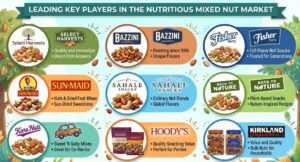
Leading Key Players in the Nutritious Mixed Nut Market
- Select Harvests
- Bazzini
- Fisher Nuts
- Sun-Maid
- Sahale Snacks
- Back to Nature
- Kars Nuts
- Hoody’s
- Kirkland Signature
- Nature’s Garden
- Terrasoul Superfoods
- Sincerely Nuts
- Graze
Nutritious Mixed Nut Market Segmentation
The global nutritious mixed nut market is highly diverse and can be segmented based on type and application. This segmentation helps in understanding consumer preferences, product demand patterns, and the evolving usage of mixed nuts across different end-use industries. The market structure is influenced by nutritional composition, pricing, packaging formats, and consumption behavior across regions.
By Type Analysis
The nutritious mixed nut market can be categorized into various types based on the composition of nuts included in the blend. Common types include almond-based mixes, cashew-based mixes, walnut-based mixes, pistachio-based mixes, and premium or exotic nut blends.
Almond-based mixed nuts are among the most popular segments due to the high nutritional value of almonds, which are rich in vitamin E, protein, and healthy fats. These blends are widely consumed as daily snacks and are often included in health-focused diets for weight management and heart health support.
Cashew-based mixes are also highly demanded, especially in regions where cashews are widely cultivated and culturally preferred. Cashews add a creamy texture and mild flavor, making them suitable for flavored and roasted nut combinations. They are often used in both savory and sweet snack variations.
Walnut-based mixed nuts are gaining traction due to the growing awareness of omega-3 fatty acids and brain health benefits. Walnuts are often included in premium health blends targeting consumers focused on cognitive health and cardiovascular wellness.
Pistachio-based mixes are positioned as premium snack options, often associated with festive consumption and gifting purposes. Their unique flavor and attractive appearance make them popular in gourmet product categories.
In addition to single-nut dominant blends, exotic mixed nut combinations featuring macadamia nuts, Brazil nuts, pecans, and hazelnuts are gaining popularity in premium segments. These mixes are often marketed as luxury or specialty health snacks, catering to high-income consumers and health enthusiasts seeking variety and enhanced nutritional benefits.
By Application Analysis
The application segment of the nutritious mixed nut market is broad and continues to expand as consumer usage patterns diversify. The primary application is direct consumption as a healthy snack. Mixed nuts are widely consumed as on-the-go snacks due to their convenience, long shelf life, and high energy content. They are commonly used in workplaces, travel, and fitness routines.
Another major application is in the health and wellness sector. Mixed nuts are increasingly incorporated into diet plans, weight management programs, and sports nutrition. Fitness enthusiasts and athletes consume them as pre- and post-workout snacks due to their balanced protein and energy content.
The bakery and confectionery industry is also a significant application area. Mixed nuts are used as toppings and ingredients in cakes, cookies, chocolates, and pastries. Their inclusion enhances flavor, texture, and nutritional value, making baked goods more appealing to health-conscious consumers.
Breakfast cereals and dairy alternatives represent another growing application segment. Mixed nuts are added to cereals, yogurt, smoothies, and plant-based milk products to improve nutritional density. This trend aligns with the rising demand for functional and fortified foods.
Additionally, mixed nuts are widely used in the food service industry, including hotels, restaurants, and catering services. They are served as appetizers, salad toppings, and gourmet ingredients in various cuisines. Their versatility makes them a preferred ingredient in both traditional and modern culinary preparations.
Geographical Analysis of Nutritious Mixed Nut Market
The geographical landscape of the nutritious mixed nut market is broadly segmented into North America, Europe, Asia-Pacific, Latin America, and the Middle East & Africa, each contributing differently to global demand.
North America holds a significant share of the market due to high health awareness, strong purchasing power, and well-established retail infrastructure. Consumers in this region are highly inclined toward organic, non-GMO, and premium snack products, driving demand for mixed nuts.
Europe is another mature market characterized by strong demand for clean-label and sustainably sourced food products. Countries in Western Europe, in particular, show high consumption of nuts as part of balanced diets and health-focused lifestyles.
Asia-Pacific is the fastest-growing region in the nutritious mixed nut market. Rising disposable incomes, urbanization, and increasing awareness of healthy eating habits are driving demand in countries such as India and China. The region is also witnessing rapid expansion of modern retail and e-commerce platforms.
Latin America is an emerging market with growing adoption of healthy snacking habits, while the Middle East & Africa region is gradually expanding due to increasing urbanization and rising health consciousness.
FAQ
1. What are mixed nuts and why are they considered nutritious?
Mixed nuts are a combination of different tree nuts and sometimes peanuts, such as almonds, walnuts, cashews, pistachios, and hazelnuts. They are considered nutritious because they are rich in healthy fats, plant-based protein, fiber, vitamins, and essential minerals that support heart health, brain function, and overall well-being.
2. What are the main health benefits of consuming mixed nuts?
Regular consumption of mixed nuts may help improve heart health by reducing bad cholesterol levels, support weight management by increasing satiety, and provide sustained energy. They are also known to contain antioxidants and omega-3 fatty acids that contribute to brain and immune health.
3. Are mixed nuts suitable for weight loss diets?
Yes, mixed nuts can be included in weight loss diets when consumed in moderation. Despite being calorie-dense, they promote fullness and reduce unhealthy snacking. Their combination of protein, fiber, and healthy fats helps control appetite and supports balanced nutrition.
4. How should mixed nuts be stored to maintain freshness?
Mixed nuts should be stored in airtight containers in a cool, dry place away from direct sunlight. Refrigeration can further extend their shelf life, especially in warm climates, by preventing the natural oils in nuts from going rancid.
5. Who should avoid eating mixed nuts?
Individuals with nut allergies should avoid mixed nuts completely, as they can trigger severe allergic reactions. Additionally, people on restricted-calorie or specific medical diets should consult a healthcare professional before regular consumption.
