
Global Potato Flour Market Introduction
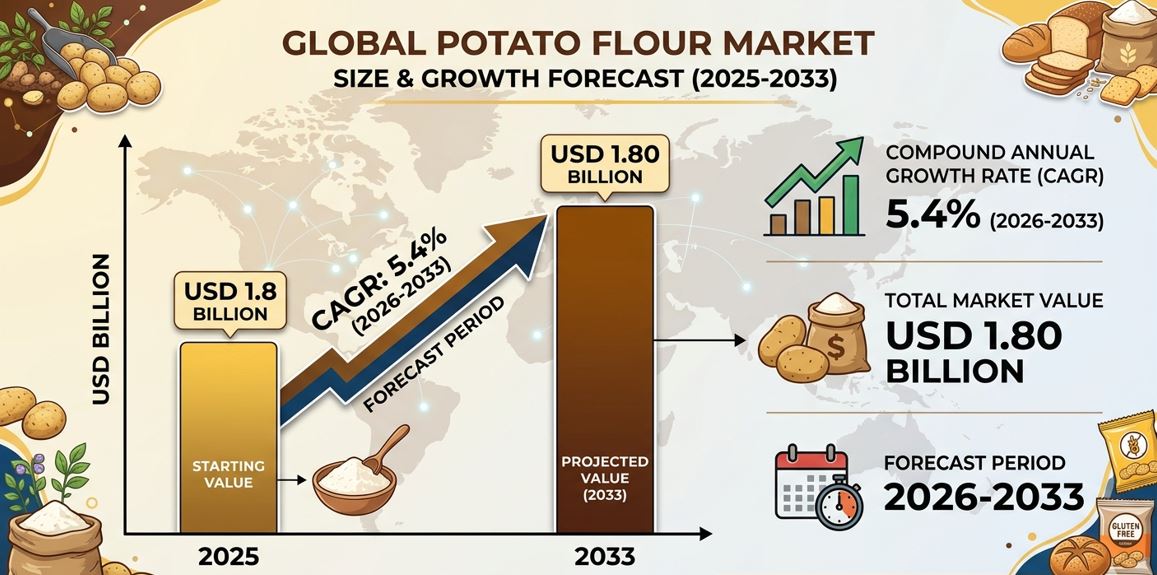
Global Potato Flour Market size was valued at USD 1.8 Billion in 2025 and USD 1.80 Billion by 2033, growing at a CAGR of 5.4% during the forecast period 2026-2033.
The global potato flour market has emerged as a significant segment within the food ingredients and processed food industry due to the increasing demand for gluten-free, natural, and convenient food products. Potato flour, produced from whole peeled potatoes that are cooked, dried, and finely ground, is widely recognized for its nutritional value, functional properties, and versatility across various applications. It contains essential nutrients such as dietary fiber, vitamins, minerals, and carbohydrates, making it a preferred ingredient in bakery products, snacks, soups, sauces, and ready-to-eat meals. The growing awareness regarding healthy eating habits and clean-label food ingredients has further accelerated the adoption of potato flour across both developed and developing economies.
In recent years, consumer preferences have shifted toward gluten-free and allergen-free products due to the rising prevalence of celiac disease, gluten intolerance, and food sensitivities. Potato flour serves as an ideal alternative to wheat flour because it is naturally gluten-free and offers desirable texture, moisture retention, and binding properties in food formulations. As a result, food manufacturers are increasingly incorporating potato flour into bread, cakes, pancakes, noodles, and snack items to cater to changing dietary trends. Additionally, the expansion of vegan and plant-based diets has created new growth opportunities for potato-derived ingredients, further strengthening market demand.
The growth of the processed food industry is another major factor driving the global potato flour market. Rapid urbanization, changing lifestyles, and busy work schedules have increased the consumption of convenience foods and packaged meals worldwide. Potato flour is extensively used as a thickening agent and stabilizer in instant soups, gravies, sauces, and frozen products due to its excellent water absorption and viscosity characteristics. Furthermore, the rising popularity of fast-food chains and quick-service restaurants has contributed to the growing utilization of potato-based ingredients in commercial food preparation.
Technological advancements in food processing and drying techniques have also enhanced the quality and shelf life of potato flour products. Manufacturers are investing in advanced production technologies to improve texture, flavor, and nutritional content while maintaining cost efficiency. These innovations have enabled companies to expand their product portfolios and meet the evolving requirements of consumers and industrial users. Moreover, sustainable agricultural practices and improved potato cultivation methods are supporting stable raw material supply, which positively influences market growth.
Geographically, Europe and North America dominate the potato flour market due to high consumer awareness, strong demand for gluten-free products, and the presence of established food processing industries. Countries such as Germany, the United Kingdom, the United States, and Canada are major contributors to regional market growth. Europe, in particular, has a long history of potato cultivation and consumption, making it a leading producer and exporter of potato-derived products. Meanwhile, the Asia-Pacific region is expected to witness the fastest growth during the forecast period owing to rising disposable incomes, expanding urban populations, and increasing adoption of western-style diets. Emerging economies such as China and India are experiencing significant growth in the processed food sector, which is boosting demand for potato flour in various food applications.
The market is also influenced by the growing use of potato flour in non-food applications. In the pharmaceutical industry, potato flour is utilized in tablet formulations and medicinal preparations due to its binding and stabilizing properties. Additionally, the animal feed industry uses potato flour as an energy-rich ingredient in feed formulations. The expanding utilization across diverse sectors highlights the broad commercial potential of potato flour and supports long-term market development.
Despite its positive outlook, the potato flour market faces certain challenges. Fluctuations in raw potato prices caused by changing weather conditions, crop diseases, and supply chain disruptions can impact production costs and profit margins for manufacturers. Moreover, competition from alternative flours such as rice flour, corn flour, tapioca flour, and almond flour may limit market expansion in some regions. However, increasing investments in research and product innovation are expected to help companies overcome these challenges and strengthen their market position.
Key players operating in the global potato flour market are focusing on product innovation, strategic partnerships, mergers, and expansion activities to gain competitive advantages. Companies are introducing organic, non-GMO, and clean-label potato flour products to attract health-conscious consumers and meet regulatory standards. Additionally, the rising popularity of e-commerce platforms and online grocery channels has improved product accessibility, enabling manufacturers to reach a wider consumer base globally.
Key Potato Flour Market Dynamics
The global potato flour market is experiencing substantial growth due to changing consumer preferences, expanding food processing industries, and increasing awareness regarding healthy and gluten-free food products. Market dynamics refer to the major factors that influence the growth, opportunities, challenges, and overall development of the industry. These dynamics include drivers, restraints, opportunities, and emerging trends that collectively shape the future of the potato flour market. As demand for functional and plant-based ingredients continues to rise across the world, potato flour has become an increasingly important component in both food and industrial applications.
One of the primary drivers of the potato flour market is the growing demand for gluten-free food products. Consumers are becoming more conscious about food allergies, digestive health, and dietary restrictions, leading to increased demand for gluten-free alternatives. Potato flour is naturally free from gluten, making it an ideal substitute for wheat flour in bakery and processed food products. It is widely used in breads, cakes, cookies, pancakes, and snacks because of its ability to improve texture, moisture retention, and shelf life. The rising prevalence of celiac disease and gluten intolerance has further strengthened the demand for potato flour among health-conscious consumers worldwide.
Another important factor driving market growth is the expansion of the processed and convenience food industry. Rapid urbanization, changing lifestyles, and increasing disposable incomes have significantly boosted the consumption of ready-to-eat meals, instant foods, and packaged snacks. Potato flour serves as an effective thickening agent, stabilizer, and binding ingredient in soups, sauces, gravies, frozen foods, and meat products. Food manufacturers prefer potato flour because of its versatility and ability to enhance product consistency and quality. As the global convenience food sector continues to grow, the demand for potato flour is expected to increase steadily.
The rising popularity of plant-based and clean-label products is also contributing to market expansion. Consumers today prefer natural ingredients with minimal processing and fewer artificial additives. Potato flour is considered a clean-label ingredient because it is produced from whole potatoes without the use of synthetic chemicals. Additionally, the increasing adoption of vegan and vegetarian diets has created favorable opportunities for potato-based ingredients in plant-based food formulations. Manufacturers are focusing on developing organic and non-GMO potato flour products to attract environmentally conscious and health-focused consumers.
Technological advancements in food processing and manufacturing are playing a major role in improving product quality and production efficiency. Modern drying and grinding technologies help preserve the nutritional content, flavor, and texture of potato flour while extending shelf life. Manufacturers are investing in research and development activities to create innovative potato flour products with enhanced functional properties. These advancements allow companies to meet the evolving needs of consumers and industrial food processors while maintaining competitive pricing and operational efficiency.
Despite the positive growth outlook, the potato flour market faces certain restraints that may hinder expansion. One of the key challenges is the fluctuation in raw material prices. Potato production is highly dependent on climatic conditions, seasonal variations, and agricultural productivity. Unfavorable weather conditions, pest infestations, and crop diseases can disrupt potato supply chains and lead to price volatility. This directly impacts manufacturing costs and profit margins for producers. Additionally, transportation and storage challenges associated with perishable raw potatoes can create supply chain inefficiencies.
Competition from alternative flour products also represents a significant challenge for the market. Various gluten-free flours such as rice flour, corn flour, tapioca flour, coconut flour, and almond flour are gaining popularity among consumers. These alternatives are widely available and are used in similar food applications, creating intense competition within the gluten-free ingredients market. To remain competitive, potato flour manufacturers must focus on product differentiation, innovation, and quality enhancement.
The market also presents several growth opportunities, particularly in emerging economies. Developing countries in Asia-Pacific, Latin America, and the Middle East are witnessing rapid growth in the food processing sector due to urbanization and rising consumer spending. Increasing awareness regarding healthy eating habits and nutritional foods is encouraging the adoption of potato flour in these regions. Furthermore, the expansion of retail chains, supermarkets, and e-commerce platforms has improved product accessibility, allowing manufacturers to reach a broader customer base.
Sustainability and environmental concerns are becoming increasingly important in the potato flour industry. Consumers and regulatory bodies are encouraging the adoption of sustainable agricultural practices and eco-friendly manufacturing processes. Companies are investing in energy-efficient production methods, waste reduction initiatives, and sustainable packaging solutions to align with environmental goals. These practices not only improve brand reputation but also help companies meet international quality and sustainability standards.
Another emerging trend influencing the potato flour market is the growing application of potato flour beyond the food industry. In the pharmaceutical sector, potato flour is used in tablet production and medicinal formulations due to its binding properties. It is also utilized in animal feed products as a rich source of carbohydrates and energy. These expanding industrial applications are creating additional revenue opportunities for manufacturers and contributing to overall market growth.
The key dynamics of the global potato flour market reflect a combination of strong growth drivers, evolving consumer preferences, technological advancements, and industry challenges. Rising demand for gluten-free and plant-based foods, increasing processed food consumption, and expanding industrial applications are expected to continue supporting market growth. Although challenges such as raw material price fluctuations and competition from substitute flours remain, ongoing innovation and growing health awareness are likely to create long-term opportunities for the global potato flour industry.
Key Potato Flour Market Restraints
Despite the growing demand for potato flour across food and industrial applications, the global potato flour market faces several restraints that may limit its expansion. These challenges affect manufacturers, suppliers, and distributors by influencing production costs, market competitiveness, and consumer adoption. Factors such as fluctuating raw material prices, competition from substitute products, supply chain limitations, and limited consumer awareness in certain regions continue to create obstacles for market growth.
One of the major restraints in the potato flour market is the volatility in raw potato prices. Potato cultivation is highly dependent on weather conditions, seasonal cycles, and agricultural productivity. Unfavorable climatic conditions such as droughts, excessive rainfall, frost, and pest infestations can significantly impact potato yields. As a result, fluctuations in raw material availability often lead to unstable pricing for potato flour manufacturers. Rising agricultural input costs, including fertilizers, labor, transportation, and storage expenses, further increase production costs and reduce profit margins for producers.
Another key challenge is the strong competition from alternative gluten-free flours available in the market. Consumers today have access to a wide variety of flour substitutes such as rice flour, corn flour, tapioca flour, almond flour, coconut flour, and oat flour. These alternatives are commonly used in bakery and processed food applications, creating intense competition for potato flour manufacturers. Some substitute flours may offer specific nutritional or functional benefits that appeal to certain consumer groups, making it difficult for potato flour products to maintain a dominant market share.
Limited consumer awareness in developing and underdeveloped regions also acts as a restraint for market growth. In many countries, potato flour is still considered a niche ingredient, and consumers may not fully understand its nutritional benefits, gluten-free properties, or industrial applications. Traditional food habits and reliance on conventional wheat-based products further slow the adoption of potato flour in these markets. Additionally, the relatively higher cost of potato flour compared to standard wheat flour can discourage price-sensitive consumers from purchasing potato-based alternatives.
Supply chain and storage challenges also affect the potato flour industry. Potatoes are highly perishable agricultural products that require proper storage and transportation facilities to maintain quality. Inadequate cold storage infrastructure and inefficient logistics systems can lead to raw material wastage and disruptions in supply chains. These issues are especially common in developing economies where transportation and food preservation technologies may be less advanced. Such operational challenges can negatively impact production efficiency and overall market stability.
Furthermore, stringent food safety regulations and quality standards imposed by governments and international regulatory bodies can increase compliance costs for manufacturers. Companies must adhere to strict processing, packaging, and labeling requirements, particularly for export markets. Smaller manufacturers may struggle to meet these standards due to limited financial and technological resources.
Potato Flour Market Opportunities
The global potato flour market presents significant growth opportunities due to changing consumer preferences, increasing demand for healthy food ingredients, and expanding industrial applications. As awareness regarding nutrition, gluten intolerance, and plant-based diets continues to rise, potato flour manufacturers are gaining new avenues for product development and market expansion. Emerging economies, technological advancements, and the growing popularity of clean-label products are further creating favorable conditions for the long-term growth of the potato flour industry.
One of the major opportunities in the potato flour market lies in the increasing demand for gluten-free and allergen-free food products. Consumers worldwide are becoming more health conscious and are actively seeking alternatives to wheat-based ingredients. Potato flour, being naturally gluten-free, is gaining popularity in bakery products, snacks, noodles, and ready-to-eat meals. The rising incidence of celiac disease and gluten sensitivity has encouraged food manufacturers to expand their gluten-free product portfolios, creating strong growth opportunities for potato flour suppliers. Additionally, the increasing preference for healthier and functional ingredients among fitness-focused consumers is expected to further boost market demand.
The rapid expansion of the plant-based and vegan food industry also offers promising opportunities for the potato flour market. Potato flour is widely used in vegan food formulations because of its binding, thickening, and moisture-retention properties. As consumers continue to shift toward sustainable and plant-based diets, food companies are increasingly incorporating potato-derived ingredients into meat alternatives, soups, sauces, and snack products. This trend is expected to create substantial growth potential for potato flour manufacturers in the coming years.
Emerging markets in Asia-Pacific, Latin America, and the Middle East provide another major opportunity for industry growth. Rising disposable incomes, urbanization, and changing lifestyles in countries such as China, India, Brazil, and Indonesia are increasing the demand for processed and convenience foods. As modern retail infrastructure and e-commerce platforms continue to expand in these regions, consumers are gaining easier access to gluten-free and specialty food products. This creates a favorable environment for potato flour manufacturers to strengthen their distribution networks and increase market penetration.
Technological advancements in food processing and manufacturing are also opening new opportunities for innovation. Companies are investing in advanced drying and milling technologies to improve the texture, flavor, nutritional value, and shelf life of potato flour products. These innovations allow manufacturers to develop premium-quality and organic potato flour products that cater to evolving consumer preferences. The growing popularity of clean-label and non-GMO food ingredients further supports product innovation and premium market positioning.
In addition to food applications, the increasing use of potato flour in pharmaceutical and animal feed industries presents additional business opportunities. Potato flour is used as a binding agent in medicinal tablets and as an energy-rich ingredient in livestock feed formulations. The diversification of applications across multiple industries helps manufacturers reduce dependency on a single market segment and expand revenue streams.
Potato Flour Market Drivers
The global potato flour market is primarily driven by increasing consumer demand for gluten-free and healthier food alternatives. With the rising prevalence of celiac disease, gluten intolerance, and digestive health concerns, consumers are actively shifting away from wheat-based products. Potato flour, being naturally gluten-free, has emerged as a popular substitute in bakery items, snacks, soups, and ready-to-eat meals. Its ability to improve texture, moisture retention, and shelf stability makes it highly attractive to food manufacturers.
Another major driver is the rapid growth of the processed and convenience food industry. Modern lifestyles, urbanization, and busy work schedules have significantly increased the demand for quick and easy meal solutions. Potato flour is widely used as a thickening, binding, and stabilizing agent in processed foods such as sauces, gravies, instant soups, frozen meals, and snack products. This versatility has made it an essential ingredient in large-scale food production.
The growing popularity of plant-based and clean-label products is also fueling market growth. Consumers are increasingly preferring natural, minimally processed ingredients with clear labeling. Potato flour aligns well with these preferences, as it is derived from whole potatoes without artificial additives. Additionally, the rise of vegan and vegetarian diets has expanded its use in plant-based food formulations.
Technological advancements in food processing are further driving the market. Improved drying and milling techniques have enhanced product quality, shelf life, and nutritional retention, making potato flour more efficient for industrial use.
Expanding applications beyond the food sector, including pharmaceuticals and animal feed, are contributing to market growth. Its binding and energy-rich properties make it valuable in multiple industries, further strengthening global demand.
Potato Flour Market Trends
The global potato flour market is witnessing several notable trends driven by evolving consumer preferences, innovation in food processing, and increasing demand for healthier and sustainable food ingredients. One of the most prominent trends is the rising popularity of gluten-free and allergen-free diets. Consumers are increasingly avoiding wheat-based products due to health concerns such as celiac disease and gluten sensitivity, leading to greater adoption of potato flour in bakery, snack, and convenience food applications.
Another key trend is the growing demand for clean-label and minimally processed food products. Modern consumers prefer ingredients that are natural, simple, and free from artificial additives. Potato flour fits well into this trend as it is derived directly from whole potatoes and aligns with transparency in food labeling. This has encouraged food manufacturers to incorporate potato flour into a wide range of packaged and processed foods.
The expansion of plant-based and vegan food products is also shaping the market. Potato flour is widely used in vegan formulations due to its excellent binding, thickening, and moisture-retention properties. As plant-based diets gain momentum globally, its usage in meat alternatives, dairy substitutes, and ready-to-eat meals continues to grow.
Technological advancements in food processing are another important trend. Improved drying, milling, and preservation techniques are enhancing product quality, texture, and shelf life. These innovations are helping manufacturers develop premium and functional potato flour variants tailored to specific industrial needs.
Additionally, there is a rising trend of product diversification and application expansion beyond the food industry. Potato flour is increasingly used in pharmaceuticals as a binding agent and in animal feed as an energy-rich ingredient. This diversification is helping companies reduce dependency on a single market segment.
Leading Key Players in the Potato Flour Market
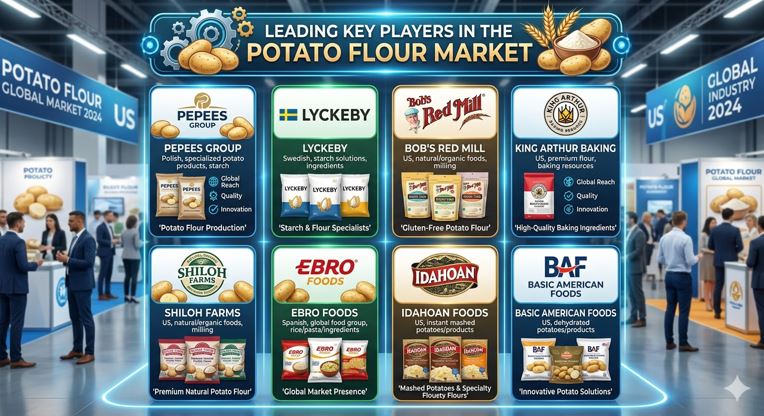
- Pepees Group
- Lyckeby
- Bob’s Red Mill
- King Arthur Baking
- Shiloh Farms
- Ebro Foods
- Idahoan Foods
- Basic American Foods
- McCain Foods
- Lamb Weston
- J.R. Simplot Company
- Keystone Potato Products
Potato Flour Market Segmentation
The global potato flour market is segmented based on type, application, and geography. This segmentation helps in understanding demand patterns, consumer preferences, and industry growth opportunities across different regions and end-use sectors. Each segment plays a significant role in shaping the overall market dynamics and future expansion of the potato flour industry.
By Type Analysis
Based on type, the potato flour market is primarily divided into organic potato flour and conventional potato flour. Conventional potato flour dominates the global market due to its wide availability, cost-effectiveness, and extensive use in large-scale food processing industries. It is commonly used in bakery products, snack foods, soups, sauces, and ready-to-eat meals. Food manufacturers prefer conventional potato flour because it offers consistent quality, functional properties, and easy integration into various formulations. Its ability to enhance texture, improve moisture retention, and act as a thickening agent makes it a widely used ingredient in industrial food production.
On the other hand, organic potato flour is gaining significant traction due to the rising demand for clean-label, non-GMO, and chemical-free food products. Health-conscious consumers are increasingly willing to pay a premium for organic ingredients that are produced without synthetic fertilizers, pesticides, or preservatives. Organic potato flour is particularly popular in developed markets where consumers prioritize food safety, environmental sustainability, and nutritional value. Although it currently holds a smaller market share compared to conventional variants, the organic segment is expected to witness faster growth in the coming years due to increasing awareness of healthy eating habits and sustainable agriculture practices.
By Application Analysis
The potato flour market is segmented by application into food and beverages, pharmaceuticals, animal feed, and others. The food and beverages segment holds the largest market share, driven by the widespread use of potato flour in bakery products, processed foods, soups, sauces, snacks, and instant meals. Its functional properties such as thickening, binding, and moisture retention make it a valuable ingredient in food manufacturing. Additionally, the growing demand for gluten-free and plant-based food products has significantly boosted its application in this segment.
In the pharmaceutical industry, potato flour is used as a binder and filler in tablet formulations. Its natural composition and excellent binding properties make it suitable for medicinal applications. It is also used in controlled-release drug formulations, contributing to its growing demand in healthcare applications.
The animal feed segment is another important application area for potato flour. It serves as a rich source of carbohydrates and energy for livestock, poultry, and pet food formulations. Its digestibility and nutritional benefits make it a preferred ingredient in feed manufacturing.
Other applications include industrial uses such as biodegradable packaging materials and adhesives, where potato starch-based derivatives are utilized.
Geographical Analysis of Potato Flour Market
Geographically, the potato flour market is analyzed across North America, Europe, Asia-Pacific, Latin America, and the Middle East & Africa. Europe holds a significant share of the global market due to its strong potato cultivation industry, high consumption of processed foods, and widespread awareness of gluten-free diets. Countries such as Germany, France, and the United Kingdom are major contributors to regional growth, supported by advanced food processing technologies and established distribution networks.
North America is another major market, driven by increasing health consciousness, demand for clean-label products, and a well-developed food industry. The United States and Canada are key consumers of potato flour, particularly in bakery and convenience food applications.
The Asia-Pacific region is expected to witness the fastest growth during the forecast period. Rapid urbanization, rising disposable incomes, and changing dietary habits in countries such as China and India are driving demand for processed and convenience foods. The expansion of retail infrastructure and e-commerce platforms further supports market growth in this region.
Latin America and the Middle East & Africa are emerging markets with growing potential due to increasing food processing activities and rising consumer awareness. However, limited infrastructure and lower awareness levels may slightly restrict market penetration in these regions.
The segmentation of the potato flour market highlights diverse growth opportunities across types, applications, and regions, with strong potential for expansion driven by evolving consumer preferences and industrial demand.
FAQ
1. What is potato flour used for?
Potato flour is widely used in bakery products, snacks, soups, sauces, and ready-to-eat meals. It acts as a thickening, binding, and moisture-retaining agent, making it a versatile ingredient in the food processing industry.
2. Is potato flour gluten-free?
Yes, potato flour is naturally gluten-free. It is a suitable alternative for individuals with celiac disease or gluten intolerance and is commonly used in gluten-free baking and food formulations.
3. What is the difference between potato flour and potato starch?
Potato flour is made from whole peeled and cooked potatoes, while potato starch is extracted only from the starch content of potatoes. Potato flour contains more fiber, protein, and nutrients compared to potato starch.
4. Which industries use potato flour besides food?
Apart from the food industry, potato flour is used in pharmaceuticals as a binding agent in tablets and in the animal feed industry as an energy-rich ingredient. It also has limited industrial applications in biodegradable products.
5. What are the major drivers of the potato flour market?
Key drivers include rising demand for gluten-free and clean-label products, growth in the processed food industry, increasing health awareness, and expanding applications in plant-based and convenience foods.
