

Wine Yeast Market Introduction
Wine Yeast Market size was valued at USD 843 Million in 2024 and grow USD 1448 Million by 2033, growing at a CAGR of 6.3% during the forecast period 2026-2033.
The global wine yeast market is very important for the wine production industry. Wine yeast helps with the fermentation process that turns grape sugars into alcohol. It also affects the flavor, aroma, texture and overall quality of wine. Wine yeast is mainly derived from *Saccharomyces cerevisiae*. Is used to control fermentation and make sure wine production is consistent.
As people want premium organic and flavored wines the need for special wine yeast solutions has increased. The wine industry is. Wineries are focusing on new ideas making their products different and improving quality. Wine yeast is an ingredient that can affect how well fermentation works how much alcohol is in the wine and the aroma and taste of the wine. Different yeast strains are chosen based on the type of wine being made like white, sparkling or rosé wine. Each strain gives the wine characteristics.
The global wine yeast market is growing steadily because people are drinking wine in many countries. Europe is still the market because of its long history of winemaking and countries like France, Italy and Spain. North America is also a market because more people are drinking wine in the United States and Canada. The Asia-Pacific region is becoming a market too as peoples lifestyles change they have more money to spend and they are moving to cities.
One of the reasons the market is growing is that people want more premium and craft wines. People are learning more about types of wine, flavors and how wine is made. This means wineries are using high-quality yeast strains to control fermentation better and make the wine taste better. People also want wines with alcohol organic wines and vegan wines. This has encouraged manufacturers to make yeast solutions that meet these changing preferences and are more sustainable.
New technology in biotechnology and microbiology has also helped the wine yeast market grow. Researchers have made new yeast strains that are better at fermentation can handle stress and give the wine complex aromas. These new strains help wineries make wine efficiently while keeping the quality high. Using fermentation techniques and special yeast nutrients has also improved productive wine manufacturing.
The market is also growing because more people want natural wines. Organic wine producers want yeast strains that are not genetically modified and are natural so they can meet the standards for certification and what consumers want. This shift towards environmentally friendly wine production is encouraging yeast manufacturers to invest in research and development to make eco-friendly fermentation solutions.
However the global wine yeast market faces some challenges. Changes in grape production because of climate change unpredictable weather and diseases can affect how much wine is produced and how much yeast is needed. There are also rules about food safety, labeling and using genetically modified organisms in some areas that can make it hard for companies to comply. The market is also very competitive. Some companies are looking at alternative fermentation technologies.
The global wine yeast market has companies, both big and small that are working on new products partnering with each other and expanding into new areas. These companies are spending a lot of money on research to make special yeast strains for types of grapes wine styles and fermentation conditions. Wineries and yeast manufacturers are working together often which allows them to make unique wines that meet what consumers want.
The market can be divided into types of yeast like active dry yeast, instant yeast, fresh yeast and specialty yeast strains. Active dry yeast is used a lot because it lasts longer is easy to store and is widely used in winemaking. Specialty yeast strains are becoming more popular as wineries want to make wines with flavors and aromas to stand out.
In the future the global wine yeast market is expected to keep growing because people are drinking wine winemaking is getting more experimental and fermentation science is advancing. New markets changing consumer preferences and sustainable production trends will create opportunities for yeast manufacturers and wine producers. As the wine industry becomes more sophisticated and focused on quality the demand, for innovative and high-performance wine yeast solutions will remain strong.
Key Wine Yeast Market Dynamics
The wine yeast market is shaped by things like what people want to drink new technology and rules that change. Wine yeast is a part of making wine because it helps make the wine taste good and smell good. As more people drink wine the wine yeast market is changing.
One big reason the wine yeast market is growing is that people are drinking wine. More people are moving to cities and have money to spend on things they like so they are trying different kinds of wine. People are drinking wine not in places like Europe but also in Asia and Latin America. This means that wineries need yeast to make their wine taste good.
Another thing that is changing the wine yeast market is that people want kinds of wine. People are getting more picky about what they drink. They want wine that tastes unique. Wineries are using yeast to make their wine taste special. Different yeast can make wine taste fruity or spicy.
New technology is also changing the wine yeast market. Scientists are making yeast that can make wine better. This yeast can handle things like temperatures and acidic environments. This helps wineries make wine efficiently and with less risk.
People are also getting more interested in wine that is made in a way. They want wine that is made without a lot of chemicals. This means that wineries are using yeast that is certified organic. Yeast manufacturers are making products that’re good for the environment.
The weather is also affecting the wine yeast market. Things like droughts and diseases can hurt the grapes. Make it harder to make wine. Yeast manufacturers are making yeast that can handle these problems.
More people are. Trying new wines, which is helping the wine yeast market. Restaurants and hotels are offering kinds of wine so wineries are trying new things to make their wine special.
There are also some challenges. One big challenge is that there are a lot of rules about making wine and using kinds of yeast. Some people do not want to drink wine that is made with modified yeast. This makes it hard for yeast manufacturers to sell their products in some places.
There is also a lot of competition in the wine yeast market. There are companies that make yeast and they have to compete with each other. This means that they have to keep making better products.
Sometimes there are not grapes to make wine, which can hurt the wine yeast market. This can happen because of weather or diseases that hurt the grapes. The economy can also affect how much wine people drink.
People are getting more interested in wine that’s low, in alcohol, which is changing the wine yeast market. Yeast manufacturers are making yeast that can make wine with alcohol.
Technology is also changing how wine is made. Wineries are using computers and special tools to make wine better. This helps them make wine efficiently and with less waste.
The wine yeast market is going to keep growing because people are drinking wine and wanting special kinds of wine. Even though there are some challenges, new technology and changing consumer preferences are going to make it possible for yeast manufacturers and wineries to succeed. The wine yeast market is going to be shaped by the wine yeast market and the things that are happening in the wine industry. Wine yeast is a part of the wine industry and the wine yeast market is going to keep changing.
Key Wine Yeast Market Restraints
The wine yeast market is growing and people are finding ways to use wine yeast in the global wine industry.. There are some problems that can stop the market from growing in the long term. These problems are related to the environment, rules and regulations what consumers want, how much things cost and competition. Wine yeast is very important for making wine. If there are any problems with wine production it can directly affect the market.
One big problem for the wine yeast market is climate change and how it affects grapes. Grapes are very important for making wine. They are easily affected by the weather. When the weather is too hot or too cold or if there is much or too little rain it can hurt the grapes. This can make it hard to grow grapes. Can affect the quality of the wine. The weather can also affect how well the yeast works. If the grapes are not good it can be hard for the yeast to do its job. This can lead to problems with the wine. Can affect how much wine is made.
Another big problem is that there are a lot of rules and regulations that wine yeast manufacturers have to follow. Different countries have rules about what kinds of yeast can be used and how wine can be made. This can be confusing and expensive for manufacturers. Some countries do not want wine makers to use modified yeast even though it can make the wine making process better. This can make it hard for wine yeast manufacturers to sell their products in some countries. The wine yeast market has to deal with these rules and regulations.
The wine yeast market is also very competitive. There are a lot of companies that make wine yeast. They are all competing with each other. This can lead to prices and lower profits for manufacturers. Small companies can have a time competing with big companies that have more money and resources. The wine yeast market has to be competitive to survive. Wine yeast manufacturers have to keep coming up with better products to stay ahead of the competition.
What consumers want is also a problem for the wine yeast market. Some people are drinking wine and more of other things like beer and non-alcoholic drinks. This can lead to demand for wine yeast. Young people are also trying different drinks, which can make it hard for the wine industry to grow. The wine yeast market is affected by what consumers want. Wine yeast manufacturers have to make wine yeast that will help wine makers make the kind of wine that consumers want.
The cost of making wine yeast is also a problem. It costs a lot of money to develop better yeast. Wine makers also need equipment to make the wine, which can be expensive. This can be a problem for wine makers who do not have a lot of money. The wine yeast market has to deal with these costs. Wine yeast manufacturers have to find ways to make wine yeast that’s affordable for wine makers.
There are also problems with getting the things that are needed to make wine yeast. Sometimes there are not enough of the things that are needed or it can be hard to get them. This can lead to delays and higher costs. The wine yeast market can be affected by these problems. Wine yeast manufacturers have to find ways to get the things they need to make wine yeast.
The risk of something going wrong during the wine making process is also a problem. If the wrong yeast is used or if the yeast is not used correctly it can lead to problems with the wine. Wine makers have to be very careful when they are making wine to make sure that everything goes smoothly. The wine yeast market has to deal with this risk. Wine yeast manufacturers have to make wine yeast that’s easy to use and that will help wine makers make good wine.
The wine yeast market is growing,. There are a lot of problems that can stop it from growing. The wine yeast market has to deal with climate change, rules and regulations what consumers want, costs and competition. Wine yeast manufacturers have to find ways to solve these problems so that the market can keep growing. The wine yeast market is very important, for the wine industry. It has to be strong for the wine industry to be strong.
Wine Yeast Market Opportunities
The wine yeast market is really taking off. This is because people are changing what they like to drink new technology is coming out. The wine industry is growing in new countries. Wineries want to make better products so they need special wine yeast that works well. The demand for this kind of yeast is going to keep going up in the few years.
One big opportunity in the wine yeast market is that people want to buy premium and craft wines. These wines have flavors and smells. Wineries are trying out yeast to make their wines special. Some yeast makes the wine taste fruity or floral. This is what wine producers want so they can make their wines stand out.
More and more people are also interested in natural and vegan wines. These people care about what they put in their bodies and want to help the environment. They like wines that are made with chemicals. So wineries are using yeast that is good for the environment. Companies that make eco- yeast are going to do well.
There are also markets for wine in Asia, Latin America and Africa. More people in these places are drinking wine so wineries are making wine and need more yeast. Countries like China, India and Brazil are drinking a lot wine. This is good for companies that make wine yeast.
New technology is also helping the wine yeast market. Scientists are making yeast that works better and makes the wine taste better. This yeast can even help wineries deal with weather conditions. Some companies are using technology to make the winemaking process more efficient.
Another trend is that people want to drink wines with alcohol. They still want the wine to taste good though. So yeast manufacturers are making yeast that can control how much alcohol is in the wine. This is an opportunity for these companies.
Wineries and yeast manufacturers are also working together. They make yeast for specific types of grapes and wine styles. This helps wineries make products and sell more wine. These partnerships are making the wine yeast market grow.
The wine yeast market has a lot of opportunities. Companies that make innovative products and care about the environment are going to do well. The wine yeast market is growing because people want premium wines and the wine industry is getting bigger, around the world. Wine yeast is a part of this growth. The wine yeast market is going to keep growing. Companies need to be ready to meet the new demands of the wine industry and wine yeast market.
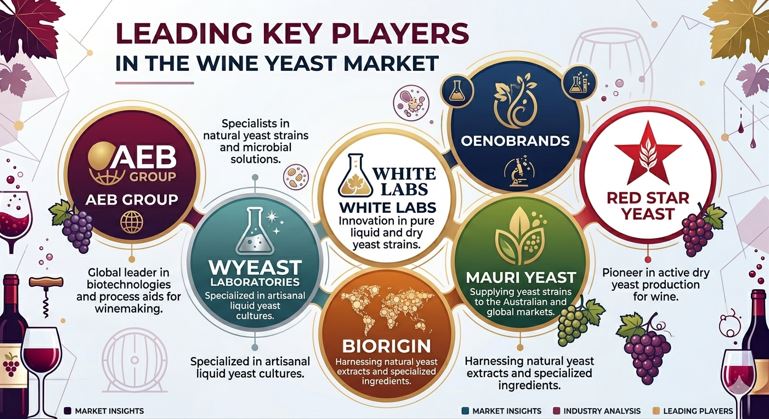
Leading Key Players in the Wine Yeast Market
- AEB Group
- OenoBrands
- Red Star Yeast
- White Labs
- Wyeast Laboratories
- Mauri Yeast
- Biorigin
- Renaissance BioScience
- AB Mauri
- BDI
- Erbslöh
- Lafood
Wine Yeast Market Segmentation Analysis
Global Wine Yeast Market Segmented on the basis of product Type, By Application And Geographical Scope.
By Product Type Analysis
- Active Dry Yeast
- Fresh and Liquid Yeast
The wine yeast market is divided into two types: active dry yeast and fresh and liquid yeast. Both of these types play a role in making wine and how good the wine turns out. Each type has its good points when it comes to storing, using and how well they work for making wine. This makes them important for wineries to choose from depending on how wine they make and what kind of wine they want to produce.
Active dry yeast is one of the used types of yeast in the world for making wine. This is because it is easy to store and move around and it lasts a time. This type of yeast is dried out. Made into small particles that do not start working until they are mixed with water. It is easy to keep and transport which makes it perfect for wineries and smaller ones too.
One of the things about active dry yeast is that it can handle different temperatures and conditions. It does not need to be kept cold for a time, which saves money on storage and transportation. This is especially good for places where it’s hard to control the temperature. Active dry yeast also makes it easy to get the results every time, which helps winemakers get the wine just right.
Active dry yeast is also very versatile. It comes in different types that are designed to bring out specific characteristics in the wine like how strong it smells or how it tastes. Winemakers can choose the type that’s best for the kind of wine they want to make, like red, white or sparkling wine. Because it is easy to use and reliable active dry yeast is the used type of yeast for making wine.
Also because people want high-quality and special wines, new types of active dry yeast have been made. These new types can handle conditions during the wine-making process, like high sugar or alcohol levels. As wineries try to make their wines better and more unique active dry yeast will likely remain the choice.
Fresh and liquid yeast on the hand is known for working very quickly and starting the wine-making process right away. This type of yeast is usually used in controlled environments where it’s crucial to start the process quickly. Unlike dry yeast, fresh and liquid yeast needs to be handled carefully and kept cold to stay alive which makes it better suited for professional wineries with good equipment.
One of the advantages of fresh and liquid yeast is that it has a lot of active cells when it is used. This means that the wine-making process starts faster and there is chance of bad things growing in the wine. Many high-end wineries like to use yeast because it can create complex and refined flavors, especially in high-quality wines where the taste is very important.
However using liquid yeast also has some drawbacks. It does not last long and needs to be kept cold which makes it harder to work with and more expensive. It is also harder to transport in places where it is hard to keep things cold. With these challenges it is still an important type of yeast for making special kinds of wine.
while active dry yeast is used the most because it is practical and versatile, fresh and liquid yeast is still important, for making quality and unique wines. Both types of yeast help winemakers achieve their goals and create the wine they want depending on what they’re trying to make and how good they want it to be.
By Application Analysis
- Red Wine
- White Wine
- Sparkling Wine and Rose
The wine yeast market is divided into areas based on how wine is made. These areas include wine, white wine, sparkling wine and rosé wine. Each type of wine needs its special yeast and way of making it. This helps get the taste, smell and quality. The yeast used is very important because it affects how the wine turns out. This is why it’s crucial to look at how wine’s made when talking about the global wine yeast market.
Red wine is a part of the wine yeast market. People over the world drink a lot of red wine and its made in large quantities. When making wine the grape skins, seeds and juice stay together for a long time. This helps get the color, taste and feel. Yeast helps turn the sugars into alcohol and makes the wine smell and taste good.
Some yeast is special for wine. It can handle temperatures and a lot of alcohol. This yeast helps make red wines like Cabernet Sauvignon, Merlot, Shiraz and Pinot Noir taste fruity, spicy and earthy. Some yeast also helps make the wine color look good and not too harsh. People want red wines so companies are making yeast thats just right for complex red wines.
White wine is another area in the wine yeast market. White wine is light, crisp and smells delicate. When making wine the grape skins don’t stay with the juice. So the yeast has to be good at keeping the smells and tastes right.
The yeast used for wine is picked to work well in cool temperatures. This helps keep the smells and tastes that make white wines like Chardonnay, Sauvignon Blanc, Riesling and Pinot Grigio great. The yeast also has to make sure the wine doesn’t have any tastes. People like refreshing and aromatic wines so there’s a big demand for yeast thats just right for white wine.
Sparkling wine and rosé are growing areas in the wine yeast market. Sparkling wine, like Champagne and Prosecco needs yeast. This yeast can handle pressure and make the wine bubbly. The yeast helps make the bubbles fine and the taste balanced. Companies are making yeast thats good for sparkling wine.
Rosé wine is made with some of the techniques as red and white wine. It needs yeast that helps keep the color and taste right. Rosé wine is getting popular in Europe and North America. People like it because its light and refreshing.
Overall each type of wine is important, in the wine yeast market. Red and white wines are made in quantities but sparkling wine and rosé are growing. This means yeast companies have to make yeast thats just right for types of wine and what people want.
By Regions Analysis
North America (US, Canada), Europe (Germany, France, United Kingdom, Italy, Spain, Rest of Europe), Asia Pacific (China, India, Japan, Rest of Asia-Pacific), Latin America (Brazil, Rest of Latin America), Middle East & Africa (South Africa, GCC Countries, Rest of MEA)
FAQs – Wine Yeast Market
1. What is wine yeast and why is it important in winemaking?
Wine yeast is a microorganism, mainly from Saccharomyces cerevisiae, used to ferment grape sugars into alcohol. It is essential because it not only drives fermentation but also influences wine flavor, aroma, alcohol content, and overall quality.
2. What are the main types of wine yeast used in the market?
The primary types include active dry yeast and fresh & liquid yeast. Active dry yeast is widely used due to its long shelf life and ease of storage, while fresh and liquid yeast is preferred for fast fermentation and premium wine production.
3. Which wine application uses wine yeast the most?
Red wine production is one of the largest application segments, followed by white wine. Sparkling wine and rosé wines also use specialized yeast strains, especially for controlled fermentation and flavor enhancement.
4. What factors are driving growth in the wine yeast market?
Key growth drivers include rising global wine consumption, increasing demand for premium and craft wines, technological advancements in fermentation, and the growing popularity of organic and sustainable winemaking practices.
5. What are the major challenges in the wine yeast market?
The market faces challenges such as climate change affecting grape production, strict regulatory requirements on fermentation and GMOs, high competition among manufacturers, and fluctuations in wine demand due to changing consumer preferences.
